

Home and construction inspections in Costa Rica: what to check before you buy or pay a draw
Who can inspect a house in Costa Rica, what a pre-purchase inspection covers, what an engineer checks at each build stage and how to use the CFIA logbook before you pay.
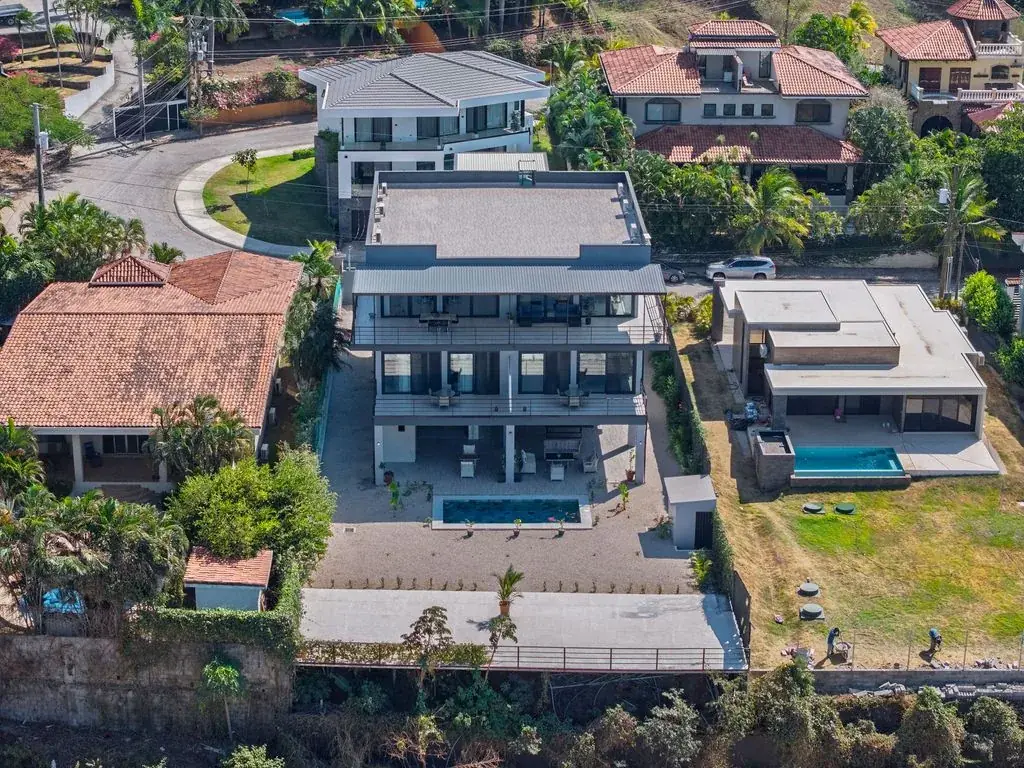
A home inspection in Costa Rica is a check of a house's structure, roof, drainage, electrical system, plumbing and permits by a CFIA-registered engineer or architect, done before you sign a purchase or release a construction payment. Inspections are not customary here and most homes sell as is, so the buyer carries the risk unless they order one (Tico Times). On a new build, tie every draw to an inspection of the stage you are paying for and to the entries in the project's CFIA logbook (bitácora).
This guide covers who can inspect in Costa Rica, what a pre-purchase inspection should cover, what an engineer checks at each stage of a build, how the bitácora works and how to use it from abroad, and how to link payments to inspections. It is general information, not legal advice. Confirm the rules that apply to your property with your attorney and your CFIA professional.
Do you need a home inspection when buying in Costa Rica?
Yes, if you want to know what you are buying. Most buyers and sellers in Costa Rica do not order inspections, and properties are usually sold as is. Repairs are also not verified before closing the way they are in some countries (Tico Times, March 2017). Whatever you do not find before closing becomes your problem after it.
The usual protection is to make your offer conditional on an inspection you choose and pay for, with a short window, often about two weeks from the accepted offer, and the right to withdraw if it turns up serious problems (Tico Times, March 2017). Your lawyer drafts the clause. If you finance the purchase, the bank may send its own appraiser, but an appraisal puts a value on the property. It is not a search for defects.
Who can inspect a house or construction site in Costa Rica?
Costa Rica has no separate government license for home inspectors. Only professionals registered with the Colegio Federado de Ingenieros y de Arquitectos (CFIA) can legally inspect and sign off on construction work, and some dedicated inspection firms add international certifications such as InterNACHI (Tico Times, March 2017).
In practice, look for:
- A current CFIA member with residential experience. Our guide on how to choose a home builder in Costa Rica shows how to look up a professional or a company in the CFIA directory.
- Independence. The inspector works for you, not for the seller, the agent or the builder whose work is being checked.
- A written report with photos, where each finding is, how serious it is and what to do next.
- Knowledge of local codes, including the Seismic Code and the Electrical Code, and of how houses age in your region: salt air on the coast, heavy rain in the south, humidity on the Caribbean side.
On price, a third-party figure: Osa Property Management, a property manager based in Uvita, says inspections in Costa Rica typically cost $300 to $700, depending on the property size and location (Osa Property Management, June 2025). Ask for a written quote and a sample report before you book.
What a pre-purchase home inspection in Costa Rica should cover
A thorough inspection of a typical single-family home takes about three to four hours, and the inspector may ask for the property survey and the building plans (Tico Times, March 2017). Book it once your offer is accepted.
| Area | What the inspector looks at | Why it matters here |
|---|---|---|
| Roof and flashing | Roofing sheets, flashing at the edges and gutters, overhangs, rust, signs of past leaks | A long-time inspector reported roofing and flashing problems on about 95% of the homes he had inspected (Tico Times, November 2021) |
| Structure | Foundations, columns, beams, walls and slabs; cracks, settlement, exposed or rusting reinforcing steel | Costa Rica is seismic, and the structure should meet the Seismic Code in force when it was built |
| Drainage and grading | Gutters, downspouts, storm drains, ground sloping away from the house, retaining walls | Water that is not led away from the house ends up in walls, slabs and slopes |
| Electrical | Panel, breakers, grounding, wiring, outlets near water, signs of amateur work | The Electrical Code adopts the US NEC (NFPA 70), and the edition that applies depends on when the CFIA sealed the plans (Decreto 36979-MEIC) |
| Plumbing and septic | Water pressure, leaks, water heater, drains, septic tank and drain field | Ask where the septic system is and when it was last serviced |
| Moisture, mold and pests | Stains, damp walls, mold, insect damage in any wood elements | Fresh exterior paint can hide moisture damage (Tico Times, November 2021) |
| Pool and outdoor structures | Pool shell and equipment, leaks, decks, ranchos and other outbuildings | Outbuildings are often added after the original permit, so check that each one has its own |
Check the paperwork, not only the building
A clean title does not tell you whether what stands on the land was permitted, or built to the approved plans. Ask the seller for these documents, and confirm them with the municipality and through your professional:
- The municipal building permit and its number, plus permits for any later additions.
- The plans registered with the CFIA, so the inspector can compare them with what was built: the area, the number of floors, the pool, the guest house.
- The final plans. Under the CFIA's consulting regulation, final plans are the definitive plans of the work as it was actually built, and the builders must deliver them to the owner and register them with the CFIA (CFIA, Reglamento para la Contratación de Servicios de Consultoría, Art. 2).
- Manuals and warranties for pumps, water heaters, air conditioning and pool equipment.
Anything built beyond the permit, such as a closed-in terrace or an extra bedroom, is worth pricing before you close. Forged documents are a separate risk, covered in our guide to Costa Rica real estate scams. Use the report in the negotiation too: one inspector suggests setting money aside in escrow for roof repairs or replacement (Tico Times, November 2021).
Construction inspections: what an engineer checks at each stage
On a new build, the inspection that matters most is the one before each payment. The CFIA's consulting regulation describes inspection as checking that the work follows good construction practice, the plans, the technical specifications and the contract. That includes reviewing the quality of materials and of the construction process, and approving materials and equipment before they are installed (CFIA, Reglamento para la Contratación de Servicios de Consultoría, Art. 9). The structure must follow the Seismic Code, CSCR 2010 with its 2014 revision, which remains in force while the CFIA edits a new 2025 version (Delfino, September 2026).
| Stage | What the inspector checks before you pay |
|---|---|
| Site and foundations | Layout against the survey and setbacks; excavation depth and bearing soil against the soil study; footing sizes; reinforcing steel size, spacing, laps and cover; formwork; any concrete or soil tests the engineer specified. Inspect before the pour, because buried steel cannot be checked later. |
| Structure | Columns, beams, walls and slabs against the structural plans; connections; corrugated reinforcing bar, since plain bar is no longer allowed (Delfino, September 2026); plumb and alignment; curing. On a steel frame, member sizes, connections and corrosion protection. |
| Roof and envelope | Roof structure and fixings, slope, flashing, waterproofing, gutters and downspouts; windows and doors sealed before interior finishes start |
| MEP (mechanical, electrical, plumbing) | Rough-in before walls and ceilings are closed: pipe sizes and pressure tests, drain slopes, the septic or sewer connection, conduit, panel location and grounding, all against the electrical and mechanical plans |
| Finishes | Tile, cabinets, fixtures and paint against the specifications and allowances in the contract; level floors; falls in showers and on terraces; sealing at wet areas |
| Handover | Punch list, systems tested and working, final plans, manuals and warranties delivered, bitácora closed |
Inspector or director of works: who is responsible for what?
The CFIA's rules separate two roles, and it matters which one you are hiring (CFIA, Reglamento para la Contratación de Servicios de Consultoría, Art. 9):
- Direction of works (dirección de obra), often called the technical director. The professional is responsible for carrying out the work on the technical and construction side, resolves technical issues and answers for the placement of materials and the construction process.
- Inspection (inspección). The professional verifies and follows the work for the owner. An inspector who only provides inspection is not responsible for executing the project, but an inspector who changes the design takes full responsibility for that change.
Both roles have a minimum visit frequency under the same article, and our construction contract guide explains how to write inspection, logbook access and stage payments into your contract. A bank that finances a build adds a third role, investment oversight (fiscalización de inversiones): a professional who reviews the technical documents and controls disbursements against progress, but who is not responsible for the quality of the work in progress (Art. 11). The bank's visit protects the bank. It is not your inspection.
What is the CFIA bitácora and how do you use it?
The bitácora is the CFIA's official logbook for a construction project, kept on the CFIA's digital logbook platform. It records the progress of the work and what each professional did, and it serves as backup and evidence if a complaint is filed against a professional (CFIA, Reglamento Especial de la Bitácora Digital, Arts. 1 and 2). It is mandatory for CFIA members during the construction phase (Art. 3).
Who writes in it
Entries can be made by the responsible professionals, officials of state institutions and of the CFIA, professionals overseeing a lender's investment (fiscalizadores) and the owner, but the owner only if they are a CFIA member themselves (Art. 4). Most foreign owners therefore follow it through their professionals rather than writing in it.
What each visit entry should show
Each site-visit entry must record at least (Art. 12):
- The date of the visit.
- The state of the work in their area.
- Observations, incidents and relevant findings.
- Orders, instructions, recommendations or corrective measures given.
- Follow-up on what was noted at the previous visit.
Professionals can attach reports, photos and drawings, stating what each file documents (Art. 13). A stoppage must be recorded with its reasons and the conditions for restarting (Art. 16), and when one professional replaces another, both record the handover (Art. 18).
How to use it from abroad
- Ask your inspector to send you each entry, with photos, as part of the weekly or stage report.
- Before you pay a draw, check that the entries for that stage exist and that earlier corrective orders show as resolved.
- Watch for changes. Changes of more than 10% of the approved area, or that affect the structural, electrical or mechanical systems, must be registered with the CFIA and processed with the relevant institutions (Art. 19).
- If you need copies later, an interested party can ask the CFIA with a written, duly justified request (Art. 22). Professionals must download the logbook after it closes and keep it for at least ten years.
How to tie a construction draw to an inspection
Pay for verified work, not for dates on a calendar. Before each draw, ask for a short package:
- The inspector's report for the stage, with photos and measurements where they matter.
- The bitácora entries covering the stage.
- Results of any tests the engineer specified for that stage, such as concrete tests.
- A list of open defects, and whether part of the payment is held back until they are fixed.
- The builder's invoice, issued by the company named in the contract.
Before the first draw, ask for a copy of the municipal building permit. If you are unsure what that file should contain, compare it against our building permit checklist. And schedule inspections before each stage is covered up: a defect found before the slab is poured or the walls are plastered is far cheaper to fix than one found after.
How Decentra Homes can inspect for you
We have worked as a design-build custom home builder in Costa Rica since 2020, on 50+ residential and commercial projects, so we know where builds go wrong. Our construction consulting covers pre-purchase checks, owner's representative site inspections and progress reports, and builder, budget and contract review. Every consultation is with a CFIA-licensed engineer and architect with 15 years of experience. Advice is $200 per hour; a series of site inspections is quoted as a fixed fee by stage or visit. For new builds with us: Minimum construction budget $350,000 USD, before land. Message us on WhatsApp or through our contact page.