

Squatters in Costa Rica: how to protect an empty lot
Squatters rarely gain title to a registered lot in Costa Rica, but an unwatched lot can be occupied and is slow to recover. Prevention and fast legal action matter most.
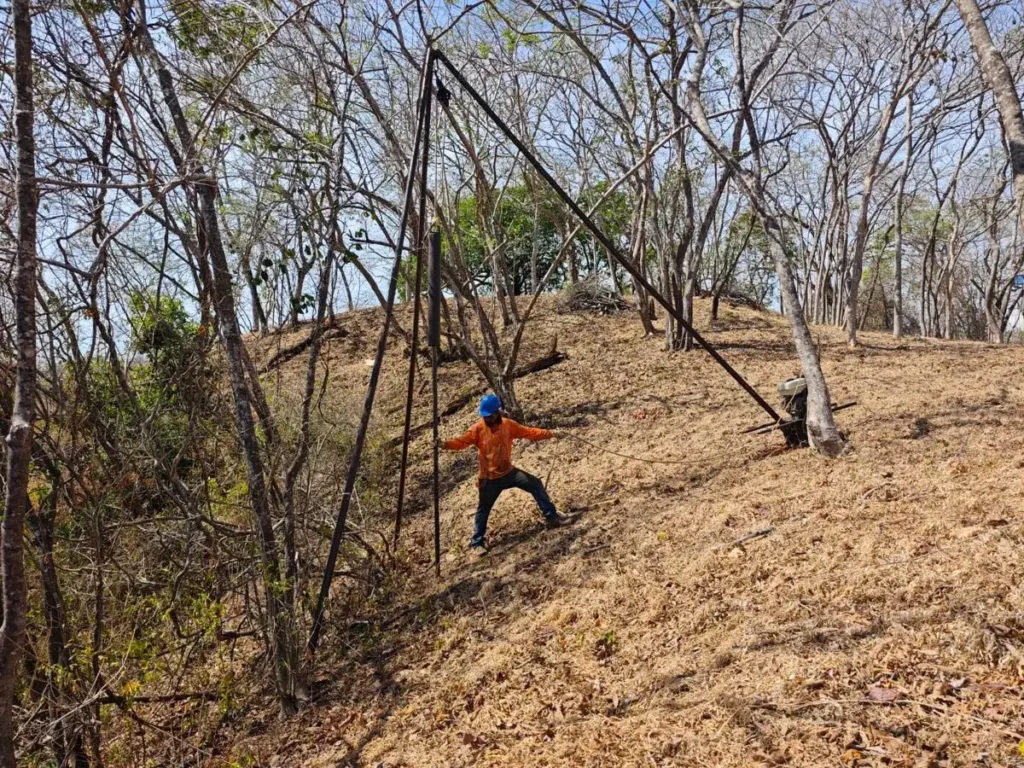
Squatters (precaristas) rarely end up owning a registered lot in Costa Rica, but they can occupy an unwatched one, and getting them out gets harder and slower the longer you wait. Taking over someone's land by force, threats, deceit or stealth is the crime of usurpación under article 225 of the Penal Code, and acquiring a registered lot by prescription (usucapión) takes ten years of possession as owner, in good faith and with a just title (Sala Primera, 2007). The best protection for an empty lot is to be visibly present: a fence, intact boundary markers, documented visits and, where it makes sense, a caretaker under a written agreement.
This guide is general information, not legal advice. If someone is on your land, speak to a Costa Rican attorney straight away, because the fastest remedies depend on how recently the occupation began.
It covers what the law says about possession and usucapión, the crime of usurpación, how to protect a lot you are not living on, what to do in the first days after an occupation, the main legal routes and two real cases that show how long evictions can take.
Can squatters take your land in Costa Rica?
Occupying land does not make someone its owner. Costa Rican law separates three things: possession, the right to possess, and ownership. A squatter can gain protected possession quickly, which is why owners need to act fast, but ownership of registered land is much harder to take.
Possession after one year
Article 277 of the Civil Code defines possession as having a thing under your power and will. Under article 279, possession can be acquired independently of ownership in two ways that matter here: by the owner's consent, although acts of simple tolerance do not give a right of possession, and by keeping possession for more than one year. That year runs from when possession was taken publicly or, if it was taken secretly, from when the dispossessed owner learned of it (Civil Code, articles 277 and 279).
The practical lesson: an occupation that you discover and challenge quickly is a very different legal problem from one that has run openly for more than a year.
Usucapión: the 10-year rule
Ownership by prescription is a much higher bar. The Sala Primera of the Supreme Court has held that usucapión requires several conditions together: a just title, good faith, and possession as owner that is continuous, public and peaceful for ten years or more. If even one is missing, it does not operate (Sala Primera, resolution 45-F-2007). The just title must be a document that would transfer ownership had it come from the real owner, and good faith means believing you have the right to possess (Sala Primera, 2007; Civil Code, article 285). In that case, a transfer of possessory rights was not a just title and the claim failed.
A squatter who knows the land belongs to someone else lacks good faith from the start. That is why buyer guides commonly agree that squatters do not simply acquire a registered lot after ten years (CRIE, September 2026). Some older articles state that rights begin to accrue after 90 days of occupation; we found no legal source for that figure, so treat it with caution and ask your lawyer.
The real risk is different: losing time, money and use of the land while a dispute runs. On untitled possession land, where the boundary with titled land is often unclear on the ground, competing claims are more likely (AG Legal, July 2026).
Usurpación under article 225 of the Penal Code
Article 225 punishes, with six months to four years in prison, anyone who by violence, threats, deceit, abuse of trust or stealth dispossesses another, wholly or partly, of the possession or holding of a property, whether by invading it, staying on it or expelling its occupants. The same penalty applies to anyone who alters boundaries or markers to take all or part of a property, and to anyone who disturbs possession with violence or threats (Penal Code, article 225, as reproduced in Salas, Revista Digital de la Maestría en Ciencias Penales, UCR, 2016). Ask your lawyer to confirm the current wording, since the Penal Code is amended from time to time.
Two points follow for owners. Moving or removing boundary markers can itself be usurpación, so keep your markers intact and photographed. And simply questioning your title is not usurpación (Salas, 2016); a neighbour who disputes a boundary on paper is a civil matter.
Which lots are most at risk?
The pattern in the sources is consistent: land that looks unused. Vacant rural land faces the greatest risk from organised groups (Q Costa Rica, 2015), and CRIE's advice for owners who are away centres on regular, documented visits and acting promptly on anything unexpected (CRIE, September 2026). A lot that is overgrown, unfenced and never visited signals that nobody will object.
How to protect an empty lot in Costa Rica
None of these steps is expensive compared with a court case. Together they show that the land is possessed and watched, and they create the evidence your lawyer will need if anything happens.
| Measure | Why it matters | How often |
|---|---|---|
| Perimeter fence and private property signs | Marks possession and makes entry an obvious act | Inspect at every visit; repair after storms |
| Boundary markers (mojones) checked against the plan | Shows where the lot ends; moving markers can be usurpación | Photograph each marker at every visit |
| Current plano catastrado and survey | Proves exactly what you own if a dispute starts | Re-check if fences, roads or neighbours change |
| Documented visits by a trusted person | Shows continuous possession and spots problems early | Regularly, with dated photos and a short note |
| Clearing and maintenance | An overgrown lot looks abandoned | At least twice a year, especially right after the rainy season |
| Caretaker under a written agreement | Daily presence on larger or remote lots | Review the agreement every year |
| Taxes and registry monitoring | Keeps records clean and alerts you to filings | Pay taxes on time; keep Alerta Registral active |
Sources: Tico Times (2015) for fences, clearing twice a year and regular checks; Q Costa Rica (2015) for fences, signs and a written caretaker contract; CRIE (September 2026) for documented visits, boundary information and registry monitoring.
Keep the survey current. If the lot has not been surveyed in years, or fences and the plan disagree, have a licensed surveyor reset and document the markers. Our topographic survey page explains what a survey includes. Alerta Registral, which emails you when a document is filed on your finca, is explained in our guide to real estate scams in Costa Rica; paying tax alone does not settle a title dispute (CRIE, September 2026).
Caretakers: protection or risk?
A caretaker is often the best protection, and the most common source of disputes when the arrangement is vague.
- Put it in writing. Record the parties, the purpose, the duration and conditions, payments, maintenance and access, and that the caretaker holds the property for you, not for themselves (Q Costa Rica, 2015; CRIE, September 2026).
- Know which law applies. According to CostaRicaLaw.com, caretaking and occupancy by mere tolerance are excluded from the landlord and tenant law, and a caretaker who refuses to leave is removed through an administrative eviction before the Ministry of Public Security under Executive Decree 37262-MSP. We could not check the decree's current text, so confirm this route with your lawyer. Employment and housing questions can overlap, so do not label a worker as something else to avoid the real relationship (CRIE, September 2026).
- Get advice before hiring. Have a Costa Rican lawyer review the agreement, including what happens when it ends.
What to do if squatters move onto your lot
- Stay safe and let the authorities act. Article 305 of the Civil Code lets owners and possessors defend their property or turn to the competent authority, but article 317 adds that possession may not be taken back by force, even by the person legally entitled to it: while the occupant objects, it has to be claimed in court (Civil Code, articles 305 and 317). Self-help eviction can backfire, so avoid confrontation, threats, demolition, forcibly changing occupied premises and cutting services (CRIE, September 2026). Call 911 if anyone is in danger.
- Record the date. Note when the occupation started or was discovered, with dated photos, videos, names and witness details. The one-year possession clock in article 279 makes this date critical.
- Call a Costa Rican attorney the same week. Choosing the right route in time matters more than anything else.
- Pull your documents. A current certificación literal, the plano catastrado, proof of your visits, tax receipts and any caretaker or lease agreements.
- File the criminal complaint for usurpación with the OIJ or the prosecutor's office if the entry involved force, threats, deceit or stealth, and pursue the civil or administrative route at the same time on your lawyer's advice.
- Do not sign anything with the occupants or accept payment from them without legal advice, since written consent can change the legal picture.
Legal routes and timelines
| Route | When it fits | What to know |
|---|---|---|
| Criminal complaint for usurpación | Invasion or occupation by violence, threats, deceit, abuse of trust or stealth | Penal Code article 225; runs alongside civil remedies |
| Administrative eviction (desahucio administrativo) | Occupants by mere tolerance, such as a guest or caretaker who will not leave, and, according to CostaRicaLaw.com, occupations of less than one year | Filed with the Ministry of Public Security; once granted, the occupant has 3 days to leave or appeal (CostaRicaLaw.com, 2009) |
| Interdicto (summary possession action) | A recent dispossession or disturbance of possession | A summary court process; CostaRicaLaw.com states it must be filed within 3 months of the invasion (2016) |
| Ordinary civil action (reivindicación) | Occupations of more than one year | A full lawsuit to recover the property (CostaRicaLaw.com, 2016) |
We could not confirm the 3-month interdicto deadline or the scope of administrative eviction for squatters in the text of the current Civil Procedure Code (Law 9342) or Decree 37262-MSP, so treat these as figures to confirm with your lawyer on day one. What is clear from the Civil Code is that possession held publicly for more than a year carries its own protection (article 279), so every week counts.
Real cases: how long squatter evictions can take
- Esterillos Oeste, Parrita (2015 to 2016). About 30 families occupied land bought by a US citizen for a beach development. His legal representatives requested the eviction in 2015, and the National Police and Judicial Police carried it out in October 2016, after more than a year and a half of occupation; the municipality demolished 17 shacks (Tico Times, October 2016).
- Chánguena farm, Palmar Sur (2001 to 2016). On a former banana plantation owned by a cooperative, workers stayed on after operations closed in 2001. The leaseholder filed to remove them in 2001, a court ruled in his favour in 2014, an administrative court ordered the families out in June 2015, a first eviction in July 2015 largely failed, and in February 2016 the Sala Constitucional suspended a second eviction to review injunction requests. The government had counted 119 families at the time of the July 2015 attempt (Tico Times, February 2016).
Both cases involved large groups. A single occupier on a small lot is usually simpler, but the lesson holds: winning in court and getting the land back are not the same thing, so prevention and speed matter most.
Buying a lot with occupants or a possession claim
Visit the lot before you pay a deposit and ask who is living on or using it. Ask whether the seller holds registered title or only possessory rights, what any occupants claim, and whether litigation affects the land (CRIE, September 2026). Your attorney can order a registry study showing whether property was titled under the possessory information law (our guide to property title search in Costa Rica lists the study types), and your surveyor should confirm that fences and structures match the plan. Ask the municipality for the land-use certificate too: our guide to uso de suelo in Costa Rica explains what it shows and how to request it. The full list of checks, and who does each one, is in our guide to property due diligence in Costa Rica.
How Decentra helps owners abroad
Decentra Homes is a design-build custom home builder in Costa Rica, founded in 2020 and CFIA-licensed under SANYC Ingeniería (CFIA registration CC-10880). We are not lawyers and do not handle evictions. If you plan to build, a house on the lot also means it is no longer empty, and we help owners who are building from abroad plan that: our land and construction consulting covers lot checks before you buy and a budget for the house, with a CFIA-licensed engineer and architect with 15 years of experience, at $200 per hour. We build in concrete first, and in hybrid and steel frame. Minimum construction budget $350,000 USD, before land (new builds).
Message us on WhatsApp at +506 8733-2930 or through our contact page.