

Uso de suelo in Costa Rica: how to get a land-use certificate before you buy
The certificado de uso de suelo is the municipality's statement of what zoning allows on a lot: use, floors, coverage and setbacks. Get it before you buy.
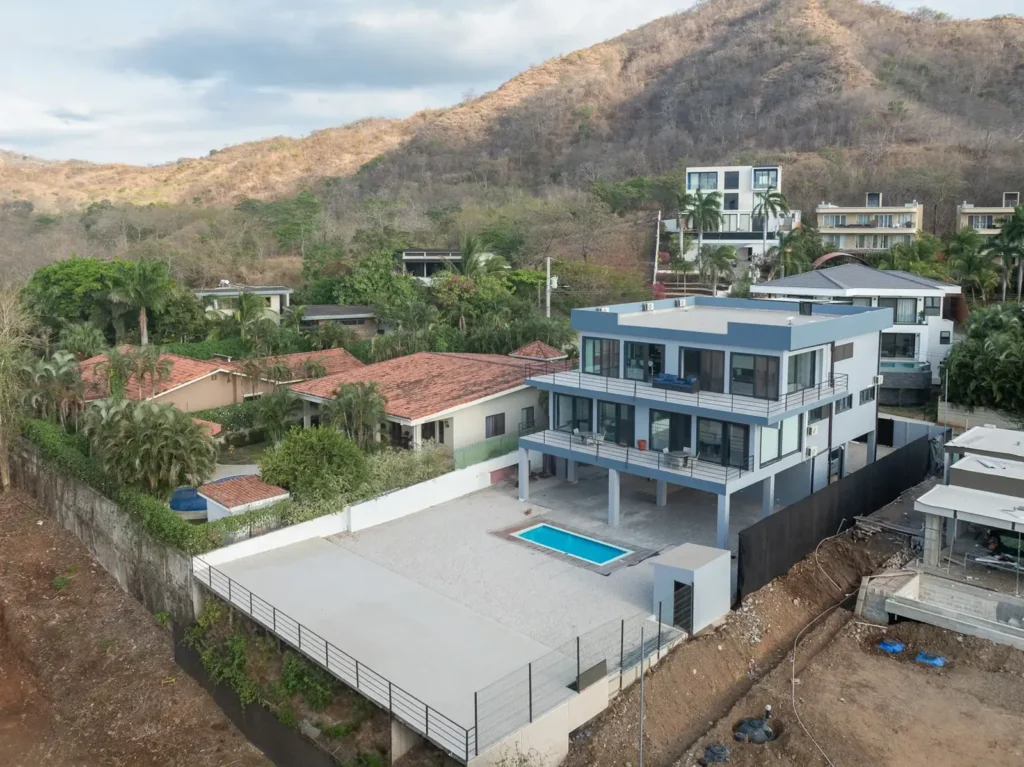
A certificado de uso de suelo is the municipality's written statement of what the zoning allows on one specific lot in Costa Rica: the permitted use, and the limits on floors, lot coverage and setbacks that come with it. You request it from the municipality where the lot sits with a registry report and a certified copy of the plano catastrado, Fees are usually low, and some municipalities publish a resolution time of about two weeks. Get it before you buy, because no municipality will issue a building permit for a house the zoning does not allow (Ley de Planificación Urbana, Law 4240, article 58).
This guide is general information, not legal advice. Zoning is set canton by canton, so confirm every point with the municipality and your own attorney.
It explains where the certificate comes from, what applies when a canton has no regulatory plan, how to read the use category, coverage and setbacks, how to request one, how long it stays valid and how it fits with the water letter and the permit. For the full permit file, see our building permit checklist.
What is a certificado de uso de suelo?
The legal basis is article 28 of the Ley de Planificación Urbana (Law 4240 of 1968). It prohibits using land or buildings for any purpose incompatible with the zoning, and requires a municipal certificate that confirms the use conforms to the zoning. Uses that existed before the zoning and do not conform can be recorded in a certificate of non-conforming use (Law 4240, article 28, INVU text).
Two points about its legal nature matter to a buyer:
- It declares, it does not grant. Costa Rican courts describe it as a declarative act that does not create or change rights; it certifies what the zoning already says (Tribunal Contencioso Administrativo, resolution 159-2013, cited in Mejías, Revista IUS Doctrina, 2018).
- It still unlocks everything else. The Sala Primera has called it a fundamental act because later permits depend on it (ruling 798-F-S1-2012, cited in the same article). Without a conforming use, no municipality may grant a commercial or industrial business licence (Law 4240, article 29) or a construction permit (article 58).
Who issues it, and what rules does it apply?
The municipality issues it, usually through its urban development or construction department. Law 4240 gives each municipality the authority to plan and control urban development through a plan regulador (regulatory plan) and its regulations, the first of which is the zoning regulation (articles 15 and 21). The zoning regulation divides the canton into use zones and, for each zone, regulates uses, heights, lot sizes and setbacks, among other points (article 24).
So the certificate is only as specific as the plan behind it. In a canton with a modern plan, it will name your zone and its parameters. In a canton without one, it rests on national rules and the municipality's technical criteria, as the next section explains.
What applies when a canton has no regulatory plan?
This is common. About half of Costa Rica's 84 cantons had no regulatory plan in August 2024, and the average plan takes 9 to 11 years to approve (Colegio de Ingenieros Topógrafos, via Delfino, August 2024).
- INVU's national rules fill the gap. Transitional provision II of Law 4240 lets INVU act where a municipality has not regulated, and the Sala Constitucional has held that without a municipal construction regulation, the Ley de Construcciones and INVU's Reglamento de Construcciones apply (resolution 924-2012, cited by La República, February 2025). INVU's role is subsidiary: it fills gaps but does not override local rules that exist.
- Subdivision follows INVU's Reglamento de Fraccionamiento y Urbanizaciones, in force since September 13, 2020. Where there is no plan, INVU declares urban districts and their cuadrantes urbanos, and whether a lot is inside a cuadrante, in its expansion area (up to 200 m around it) or outside both changes what kind of land division is allowed (INVU, Cuadrantes Urbanos guide). INVU's board approved the cuadrantes in 2023.
- The certificate rests on regional and national rules and technical criteria. A court has held that where there is no local planning, the certificate must be based on regional and national rules and on technical criteria, never on arbitrary discretion (Tribunal Contencioso Administrativo, resolution 244-2013, cited in Mejías, 2018).
National protections apply everywhere, plan or no plan: the maritime zone, river and spring setbacks under the Forestry Law and environmental rules. Our guide to buying land in Costa Rica to build covers those checks.
When a new plan arrives, the rules can change quickly. Santa Ana's new regulatory plan took effect on October 5, 2026, replacing its 1991 plan, and land-use certificates that had not yet led to a licence or other authorisation lost their validity. Projects already in process had 10 business days to file under the transitional rules (Delfino, October 2026). Santa Cruz, which covers Tamarindo and Flamingo, expects a coastal and urban plan in the first quarter of 2027 (Teletica, July 2026). If you are buying in a canton with a plan on the way, ask the municipality what the draft says about your lot.
Zoning categories you may see on a certificate
Names and codes vary by canton. Escazú's plan, for example, splits residential land into low, medium, medium-high, high and high-high (alta-alta) density zones (Municipalidad de Escazú, Plan Regulador). Broadly, certificates and plans use categories like these:
| Category | What it usually allows | What to check for a custom home |
|---|---|---|
| Residential (by density) | Single-family homes, often with limits on extra units | Whether a guest house or second unit is allowed, minimum lot size, coverage and height |
| Mixed use or commercial | Housing with shops, offices or services | Whether a single-family home is a permitted use, and stricter parking or frontage rules |
| Tourism | Hotels, lodges and tourist services | Whether a private home is allowed, and any licensing link for rentals |
| Agricultural or rural | Farming and farm buildings | Whether a house is allowed at all, minimum parcel size, and how the land can be divided |
| Protection or conservation | Little or no construction | How much of the lot it covers, since this can remove the building site |
Read the category against your actual plan. A lot zoned residential can still be wrong for you if it allows one unit and you want a main house plus a casita.
Coverage, height and setbacks: reading the numbers
A land-use certificate typically states the permitted type of construction, the number of floors and the maximum percentage of the lot that can be occupied, plus any other restriction in the plan (Diario Extra, 2026). Law 4240 lists use, location, setbacks and coverage as grounds on which a permit can be refused (article 58). In practice, four numbers decide your footprint:
- Coverage (cobertura). The share of the lot the building may cover. On a 1,000 m² lot, a 50% coverage limit caps the footprint at 500 m², before setbacks.
- Height and floors. Usually given as a number of floors, a height in meters, or both. Check how the municipality measures height on a slope.
- Setbacks (retiros). The front setback (antejardín) usually follows the road alignment, which the municipality or MOPT gives; Sarapiquí, for example, issues the road setback resolution alongside the land-use certificate (Municipalidad de Sarapiquí, 2025). Side and rear setbacks come from the zone's parameter table.
- Local construction rules. Some plans add detail. Montes de Oro's construction regulation requires windows facing a neighbouring lot to be at least 1.5 m away in one-storey houses and 3.0 m in houses of two or more storeys, and at least a third of the front yard to stay green (Municipalidad de Montes de Oro, Reglamento de Construcciones).
River, spring and other alignments then cut into what is left. The INVU river alignment and its distances are in our building permit checklist; on a sloped lot, our guide to building on a slope explains how grading changes the usable area.
How to request a uso de suelo, step by step
- Find the right municipality. The canton is on the certificación literal and the plano catastrado.
- Get the documents. A typical list is the municipal form with no erasures, the applicant's ID, a registry report for the property and a certified, full-size copy of the registered plano catastrado (Municipalidad de Sarapiquí, 2025 and 2026). Our guide to property title search in Costa Rica explains how to order the registry documents online. Ask your municipality for its own current list.
- State the use you want. Ask about the specific project: a single-family home, a home with a guest house, or anything with a commercial or rental side. A certificate for "vivienda" answers a different question from one for a guest house or a short-term rental business.
- File and track it. Use the channel the municipality offers; Sarapiquí, for example, asks for ID at its front desk (Unidad de Plataforma) for in-person filings. If you are abroad, ask whether your attorney or architect can file for you with a written authorisation.
- Read the answer with a professional. Have your architect or engineer test the house you want against the coverage, height and setbacks before you sign a binding offer.
How much does it cost and how long does it take?
The fee is set by each municipality and is usually small. Sarapiquí's 2025 list showed the certificate as free; its August 2026 list shows ₡1,959, with a resolution time of 15 calendar days in both (Municipalidad de Sarapiquí). Fees and timing vary by canton and change from year to year, so ask for the current figures when you file. The real cost is the time, so build the wait into your due diligence period and ask whether the municipality will inspect the lot first.
How long is a land-use certificate valid?
There is often no fixed expiry. Legal commentary notes that the certificate has no defined period of validity, but its content holds only while the zoning it certifies stays the same (Mejías, Revista IUS Doctrina, 2018). Sarapiquí puts the same idea on its form: validity is indefinite, conditional on changes to the regulatory plan (Municipalidad de Sarapiquí, 2025).
That condition is the risk. As Santa Ana showed in October 2026, a new plan can void certificates that have not yet been used for a permit. Practical rules:
- Ask for a certificate issued in your name, or a fresh one, during due diligence. Do not rely on an old one from the seller.
- Ask the municipality whether a new or amended plan is in process for the area.
- Move from certificate to permit without long gaps if a plan change is coming.
Uso de suelo, the water letter and the building permit
The land-use certificate comes first. Diario Extra (2026) lists it as step one of the permit process, ahead of land due diligence, utility availability and the plans, and recommends checking it before buying land.
| Document | Issued by | What it decides | Link to uso de suelo |
|---|---|---|---|
| Certificado de uso de suelo | Municipality | Whether the use is allowed and on what parameters | The starting point |
| Water availability letter | AyA, the ASADA or a municipal system | Whether the lot can get water | Some providers ask for an approved land use first; Alajuela's municipal water form requires it for requests of more than 15 services, water used in commercial or industrial activities, areas with low water or network capacity and properties held in derechos |
| Alignments | Municipality, MOPT, INVU and others | The setbacks from roads, rivers and other features | Applied on top of the zone's setbacks |
| Building permit | Municipality, after CFIA registration of plans | Whether you can build the design | Refused if the design does not conform to use, location, setbacks or coverage (Law 4240, article 58) |
Source for the water row: Municipalidad de Alajuela, water availability request form (updated March 2025). How the water letter works is in our water letter guide.
Can you change the land use of a lot?
Sometimes, but do not buy a lot counting on it. Changing zoning means modifying the regulatory plan, and Law 4240 applies the same steps as adopting one: a public hearing announced in the official gazette at least 15 business days ahead, approval by INVU's urban planning directorate, a formal vote by an absolute majority of the municipal council, and publication in La Gaceta (article 17). INVU can refuse parts of a plan on legal or technical grounds of national or regional interest (article 18). Where SETENA, forestry or other agencies are involved, the process is longer still.
If the use you want is not allowed today, make the purchase conditional on an approval, or choose another lot.
Questions to ask the municipality before you buy
- Which zone is the lot in, and which plan or national rules does the certificate apply?
- Is a single-family home allowed, and is a guest house or second unit allowed?
- What are the maximum coverage, the height or number of floors, and the front, side and rear setbacks?
- What is the minimum lot size, in case you ever want to divide it?
- Is a new or amended regulatory plan in process, and does the draft change this zone?
- Does the lot touch a protection area, a river or a road with its own alignment?
- Does the certificate have an expiry date?
How Decentra helps with land use
Decentra Homes is a design-build custom home builder in Costa Rica, founded in 2020, with design and construction CFIA-licensed under SANYC Ingeniería (CFIA registration CC-10880) and CFIA-licensed architect Sergio Cerceño. Before you buy, our land and construction consulting reviews the land-use certificate with you and tests the house you want against it, with a CFIA-licensed engineer and architect with 15 years of experience, at $200 per hour. Once you own the lot, our permits and water letters service takes the file to the municipality. We build in concrete first, and in hybrid and steel frame. Minimum construction budget $350,000 USD, before land (new builds).
Send us the plano catastrado and the certificate on WhatsApp at +506 8733-2930 or through our contact page.