

Water letter in Costa Rica: what it is, who issues it and how to get one
A water letter (carta de disponibilidad de agua) is a written confirmation from AyA, the local ASADA or a municipal water system that it can supply a specific property, and without one a Costa Rican municipality will not issue a building permit.
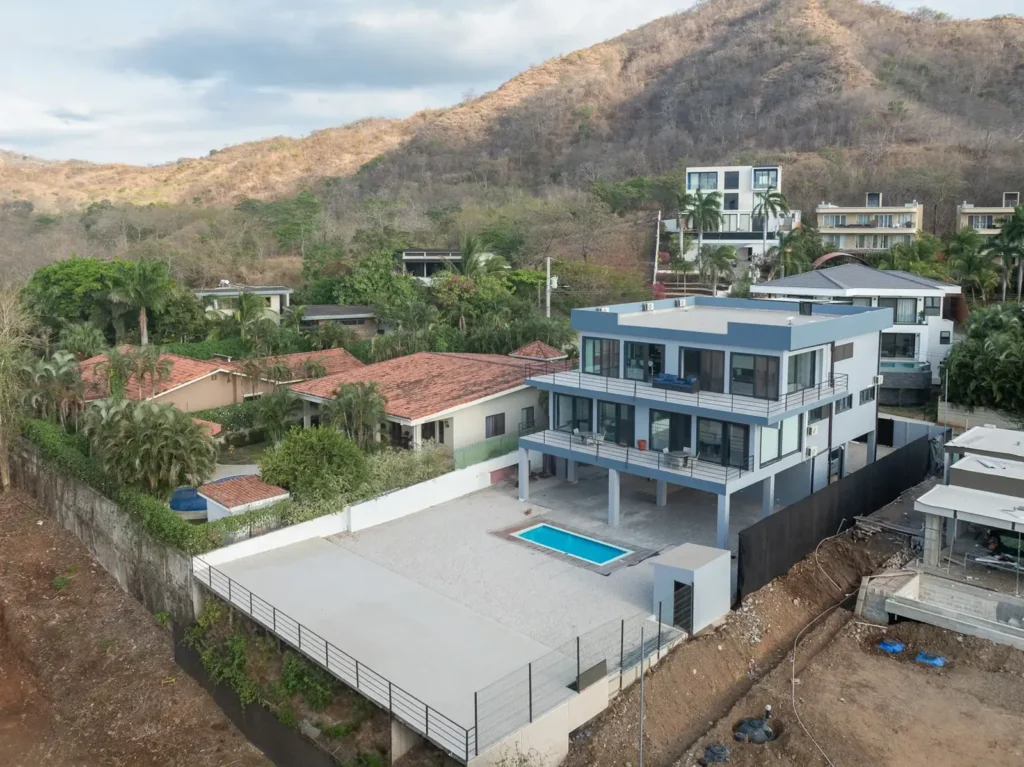
A water letter (carta de disponibilidad de agua) is a written confirmation from AyA, the local ASADA or a municipal water system that it can supply a specific property, and without one a Costa Rican municipality will not issue a building permit. It is the single document most likely to stop a custom home before it starts. Electricity and road access can usually be extended at a cost. Water often cannot.
This guide covers who issues the letter, why it belongs at the start of your project, how to request it, how long it lasts, what to do if it is refused and how it fits with the rest of the permit process.
What is a water letter in Costa Rica?
The water letter is a formal statement from a recognised water provider that the property is inside its service area, that it has capacity for the connection and that service is authorised for the project. You will see it called a carta de disponibilidad de agua, a constancia de disponibilidad or simply a water availability letter. Municipalities ask for it with the building permit application, and buyers ask for it during due diligence.
Two points catch many overseas buyers out:
- A capacity letter is not an availability letter. A capacity letter (constancia de capacidad hídrica) says a future availability letter may be issued once infrastructure is built. Municipalities do not accept it for building permits; it is mainly used in early development planning (Invicta Legal).
- An existing connection is not a blank cheque. A lot that already has a legal meter is a good sign, but it does not automatically cover a second house, a casita or apartments (Howler).
Who issues the water letter?
The issuer depends on who runs the water system where the lot sits. There are three formal providers, plus concessions for private sources.
| Provider | Who they are | When they issue the letter |
|---|---|---|
| AyA (Instituto Costarricense de Acueductos y Alcantarillados) | The national water and sewer utility, which also regulates and supervises local providers | Only where AyA itself runs the aqueduct, often called "city water" |
| ASADA | A community water association that runs a local aqueduct under an agreement with AyA | Only where the ASADA is legally created, registered with AyA and operating an aqueduct |
| Municipality | A canton that runs its own water system, such as Alajuela | Only where the municipality operates the aqueduct |
| Concession (well, spring, creek or river) | Granted by the Water Department (Dirección de Agua) of MINAE, with wells registered with SENARA | Where no formal provider can serve the lot and the source is legal and tested |
Sources: Invicta Legal; RE/MAX office blog (2024); Howler.
ASADAs matter more than many buyers expect. In 2025 there were 1,089 ASADAs under agreement with AyA, supplying about 21% of the country's population (Delfino, August 2026). Outside the main towns, and along much of the Pacific coast, the local ASADA is usually the one that decides.
Why you need the water letter before you buy or design
The order matters. A lot that cannot get a water letter is, in practice, a lot you cannot build on, whatever the listing says about services (Tico Times, September 2026). That is why the letter belongs in due diligence, before money moves, not after closing.
The numbers explain the caution:
- AyA turned down 22% of requests in 2023. It received 23,272 water availability requests nationwide and rejected 5,119 of them. The main reasons were no water main in front of the property, not enough water and requests that did not meet minimum legal requirements (Semanario Universidad, March 2024).
- ASADAs are refusing more often. In its 2026 audit of ASADAs, the Contraloría General de la República reported that the share of new service requests rejected rose from 41.41% in 2024 to 50.05% in 2025, mainly because of water deficits and networks that had reached their hydraulic capacity (Delfino, August 2026).
- Supply is tightest where many foreign buyers look. Availability is constrained in parts of Guanacaste and along the Pacific coast, where development has run ahead of supply (Tico Times, September 2026).
The letter also shapes the design. It confirms service for the project, and an existing connection does not automatically cover more houses, casitas or apartments (Howler). Some providers also ask for a water volume calculation for larger or commercial projects, or where the network has little capacity (Municipality of Alajuela, 2025). If you plan more than one dwelling, ask for the letter on that basis.
Make it a condition of your purchase
Ask the seller for the current water letter before you sign. If there is none, or it is unclear, make a valid letter a written condition of the purchase contract, and have your own lawyer confirm with the municipality that the format will be accepted for a permit (Howler). If the seller cannot or will not provide it, renegotiate with protections in the contract, pause or walk away.
Our land and construction consulting checks water, land use, access and slope on the lot you are considering and puts the findings in writing before you commit.
How to request a water letter
Requirements vary by provider, so always confirm the current list with the AyA office, the ASADA or the municipality that serves the lot. The steps below are typical.
- Identify the provider. Ask neighbours, the seller and the municipality which system serves the lot. In many coastal areas it is an ASADA, not AyA.
- Gather the documents. A typical list, from the Municipality of Alajuela's 2025 form, asks for a request in the name of the registered owner, the cadastral plan (plano catastrado), proof that municipal services are paid up and the owner's identity document. If a third party files it, they add a copy of their own ID. A company owner adds a certificate of legal standing (personería jurídica) issued within the last month.
- Add project details where needed. In Alajuela, projects of more than 15 water services, commercial or industrial uses that consume water and lots in areas with limited capacity must also include the approved land use and a monthly water volume calculation by an accredited professional.
- File the request. AyA's certificate is free, and it can be requested at AyA customer service offices nationwide or by calling 800 7376783 (Delfino, March 2024). ASADAs and municipalities have their own counters and forms.
- Read the letter carefully. Check the owner's name, the plano number, the number of services approved, any conditions such as infrastructure you must pay for, and the issue date.
Overseas buyers do not need to be in Costa Rica for this. Through our permits and water letters service we prepare and file the request for you and follow it up with the provider.
How long does it take to get a water letter?
There is no single published processing time that applies to every provider, and the time can vary widely between an AyA office, a small ASADA and a municipal water department. We check the current timing with the provider that serves your lot. What is well documented is the time for the alternatives: a water concession for a well or a surface source takes about 12 to 18 months (Invicta Legal). That gap is why it pays to know early which route your lot needs.
How long is a water letter valid?
Water availability letters from AyA, ASADAs and municipalities are valid for one calendar year from the date they are issued. You can ask for a one-year extension, but extensions are usually granted only two or three times and are not guaranteed (Invicta Legal; RE/MAX office blog, 2024).
In practice this means timing your design. If the letter is close to expiring by the time your plans reach the municipality, renew it first. A letter issued years ago to a previous owner should be treated as a starting point, not as proof.
What to do if the water letter is denied
A refusal is not always the end. It depends on why the provider said no. Find out the exact reason in writing, then look at the options below with your lawyer and engineer.
1. Pay for the missing infrastructure
If the problem is no pipe in front of the lot or a weak section of network, the provider may issue the letter once the infrastructure is built. Owners may have to fund water line extensions, pressure and air release valves, storage tanks, wells, pumps or hydrology studies, which are treated as donations to AyA, the ASADA or the municipality (Invicta Legal). Get the provider's commitment in writing before you spend.
2. Ask about planned infrastructure
In March 2024 AyA's board approved a reform to its service regulation so that water certificates can take into account infrastructure planned over the next 36 months, up from 12, where AyA or an ASADA plans to build and the system has enough flow (Delfino, March 2024; Semanario Universidad, March 2024). If your area has works planned, ask the provider how that affects your request.
3. A concession over a drilled well
A machine-drilled well can serve as a legal source if it is permitted and registered and you obtain a concession for human consumption from MINAE's Water Department, backed by technical proof of quantity and laboratory-tested quality. A water engineer is needed, and the Water Department normally accepts only one, two or perhaps three concession requests per well (Invicta Legal). The well itself needs approvals from MINAE, SENARA and AyA, which one driller puts at 2 to 6 months, and the concession can take up to a further year (Q Costa Rica, 2023).
A well is not a quick fix everywhere. Wells require concessions from the Dirección de Agua (Tico Times, September 2026), and in water-stressed parts of Guanacaste new drilling has been frozen or severely limited (Howler).
4. A spring, creek or river
A surface source on the property can be used with a concession, following steps similar to a well. These sources are more exposed to contamination, floods, landslides and dry seasons (Invicta Legal). A spring on the land does not automatically count as a potable source; it needs permits, treatment and approval (Howler). One engineer quoted by a local brokerage notes that flow is measured at its lowest in the dry season, so applications filed from December to April move faster, and others can take about six months longer (Osa Tropical Properties, 2023).
5. Condominium and hand-dug wells
Inside a formally created condominium, the developer can obtain a concession for the condominium's own use, but only after written confirmation that AyA, the ASADA and the municipality cannot serve it. Hand-dug wells are recognised in INVU regulations from 2021, but many municipalities did not accept them unregistered; some began approving them through their municipal council in 2023 (Invicta Legal). Check your canton's current position before relying on either route.
What does not count
Rainwater harvesting is a sensible backup and helps cut use, but municipalities have not accepted it as the legal source for a building permit (Howler).
How the water letter fits with permits
The water letter sits early in the chain of approvals. A typical sequence for a custom home is:
- Land-use certificate (uso de suelo) from the municipality.
- Due diligence on the lot, including municipal debts.
- Water and electricity availability letters.
- Plans by CFIA-registered professionals, filed through the CFIA's APC platform and reviewed against the Seismic Code and Electrical Code.
- The INS workers' risk insurance policy.
- The municipal building permit, with taxes and fees paid.
Source: Diario Extra, 2026. Water confirmation from the provider is needed before the CFIA approves the plans (Ticonstru, 2024), and municipalities list water availability among the requirements for the permit itself. In the canton of La Unión, for example, a complete application with CFIA-sealed plans, water availability and the stamped plan can be approved in one day if the 1% construction tax is paid the same day (El Observador, March 2024). Missing water paperwork does the opposite: without the letter or well documentation, the application does not move (Howler).
We handle this chain for our clients through our permits and water letters service, with our CFIA-licensed architect preparing the plans.
Water letter checklist for buyers
- Which provider serves this lot: AyA, an ASADA, the municipality or none?
- Is there a current letter, in whose name, and for how many services?
- When was it issued, and how many extensions has it had?
- Is it an availability letter or only a capacity letter?
- Does it carry conditions, such as infrastructure you must pay for?
- Does it cover the home you plan, including a guest house or pool?
- If there is no formal provider, is there a registered well or source with a concession?
- Is a valid letter a written condition in the purchase contract?
Start with the water
If you have a lot in mind, send us the plano catastrado or the listing link before you sign, and we will tell you who supplies water there and what it will take to get the letter. Minimum construction budget: $350,000, before land. WhatsApp +506 8733-2930 or email info@decentrahomes.com. You can also browse our locations pages for water conditions town by town.