

How to finance building a house in Costa Rica: a 2026 guide for foreigners
Most foreigners fund a Costa Rica build with cash or home-country financing; local banks lend mainly to residents, and private lenders and seller financing fill the gaps.
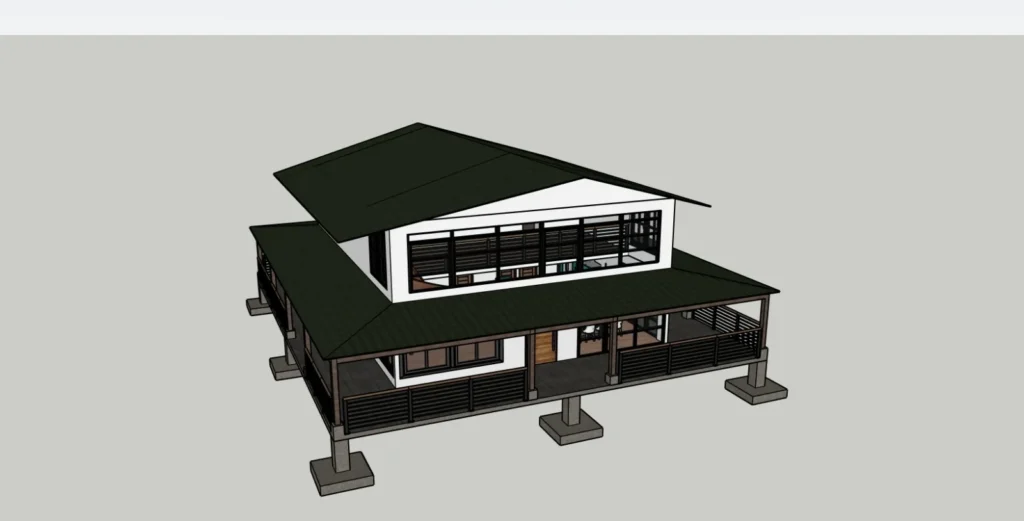
Most foreigners finance a new home in Costa Rica with cash or with money raised in their home country, such as a home equity line of credit, a cash-out refinance or other assets, because Costa Rican banks lend to foreigners mainly when they are legal residents and on stricter terms (Tico Times, September 2026). Local bank loans, private property-backed lenders and seller financing for the land fill the gaps. Whatever the source, plan the money around the build schedule, not just the total.
This guide is general information, not financial or legal advice. Confirm current terms with each lender and with your own lawyer and tax advisor.
This guide covers the main ways to fund a build, bank terms for residents and non-residents, colones vs dollars, private lenders, land financing, construction draws and escrow.
How do foreigners finance building a house in Costa Rica?
There are five common routes, and many owners combine two or three of them.
| Option | Who it suits | Main points to check |
|---|---|---|
| Cash and savings | Owners who can fund the build without borrowing | Keep the full budget plus contingency available on the payment schedule, and plan how you will move the money |
| Home-country financing (HELOC, cash-out refinance, securities-backed credit, personal loans) | Owners with equity or assets in the USA, Canada or Europe | Your home, portfolio or income backs the loan, not the Costa Rican property |
| Costa Rican bank loan | Residents in particular; some non-residents | Lower loan-to-value for non-residents, heavy paperwork, longer approval times |
| Private property-backed lender | Short-term needs, land, bridge financing | Higher rates, shorter terms, careful due diligence on the lender |
| Seller financing for the land | Buyers of a lot whose seller will carry part of the price | Large deposit, balloon payment, a properly registered instrument |
Sources: Tico Times (September 2026); Coldwell Banker Costa Rica (July 2026); Dominical Realty (May 2026).
Paying cash or using home-country financing
Most foreign purchases in Costa Rica close in cash or with financing arranged in the buyer's home country (Tico Times, September 2026). Coldwell Banker Costa Rica lists the home-country tools buyers use: home equity lines of credit, cash-out refinancing, securities-backed credit lines and personal or investment loans (July 2026).
- HELOC or cash-out refinance. You borrow against a home you already own in your home country, then use the money to pay for land and construction in Costa Rica. The loan follows your home country's rules and lending standards.
- Retirement funds. Some buyers look at retirement accounts, such as a self-directed IRA in the USA. Wise noted in November 2024 that this route has strict rules and that the property must be held as an investment, not a home you live in. The rules, taxes and penalties are complex and vary by country and account type.
We do not advise on these products. Ask a US or Canadian lender, or a financial and tax advisor in your home country, which options fit your situation and what each one costs before you commit.
If you are managing the project from overseas, our guide to building in Costa Rica from abroad covers how to stay in control of the work and the payments.
Can a foreigner get a construction loan from a Costa Rican bank?
Yes, but it is harder for non-residents. There are no rules that bar foreigners from applying for a mortgage in Costa Rica (Wise, November 2024), yet in practice banks lend mainly to legal residents, with loan-to-value ratios well below North American norms and long approval times (Tico Times, September 2026). Lenders weigh income, credit history, existing debts, reserves and collateral, not only residency (Coldwell Banker Costa Rica, July 2026).
Banks that offer housing credit include the state banks Banco Nacional (BNCR) and Banco de Costa Rica (BCR), and private banks such as BAC, Banco BCT and Banco LAFISE (Coldwell Banker Costa Rica, July 2026). Several of them finance construction as well as purchase.
Residents vs non-residents: what the banks publish
| Lender | What it publishes | Source |
|---|---|---|
| BAC | Up to 75% financing for DIMEX residents and up to 50% for non-residents, based on the lower of the appraisal or the selling price; fixed rate for the first two years; property held in a trust; financing for lots and for building | BAC foreigners page (checked November 2026) |
| Banco LAFISE | Standard home loans up to 70% of property value, up to 30 years, in dollars or colones; up to 80% through private banking depending on profile and country of residence; covers purchase, construction, renovation and refinancing; life and property insurance required | Coldwell Banker Costa Rica (July 2026) |
| Banco de Costa Rica (Mi Casa BCR) | Up to 95% of appraised value in colones over up to 30 years, and up to 85% in dollars over up to 25 years; uses include lot purchase and lot plus construction; dollar loans go to borrowers with dollar income or low currency risk | Delfino (September 2026) |
| Banco Nacional | At its March 2026 housing fair: up to 30 years in both currencies, up to 95% for other housing plans (restrictions apply, subject to the client's profile), uses including lot purchase and construction, and a grace period of up to 6 months on principal | Delfino (March 2026) |
The BCR and Banco Nacional offers do not say whether they apply to non-residents, so ask each bank what it offers someone with your residency status and income.
Typical down payment for a foreigner
Expect to put in much more of your own money than in North America. Dominical Realty puts the usual down payment at 20% to 40% depending on the property and lender (May 2026). Wise, citing RE/MAX, puts it at 30% to 50% for foreigners on traditional bank mortgages (November 2024). BAC's own 50% limit for non-residents sits at the top of that range.
What documents banks ask for
Requirements vary by bank, but a typical list for a foreign applicant includes (Wise, November 2024):
- A valid passport and proof of address
- Proof of income and tax returns for the past 2 to 3 years
- Bank statements for the last 6 to 12 months
- A credit report
- A property appraisal, title search results and insurance documents
- Spanish translations, with an apostille or authentication where required
Lenders usually also require life insurance on the outstanding balance and insurance on the property (Coldwell Banker Costa Rica, July 2026).
Colones or dollars: currency risk on a Costa Rican loan
Costa Rican banks lend in colones and in dollars, often with different terms. At BCR, for example, colón loans can go to 95% over 30 years, while dollar loans go to 85% over 25 years and are reserved for people who earn in dollars or have low exchange-rate risk (Delfino, September 2026).
The reason is currency risk. Borrowers whose income is in a different currency from their debt are known in Costa Rica as "no generadores" (El Observador, June 2022). In June 2017, El Financiero reported that under the SUGEF rule then in force (SUGEF 1-05), a lender that granted a dollar loan to someone paid in colones had to book an extra 1.5% of the balance granted, a cost that a Banco Nacional executive said pushed up the interest rate. These rules may have changed since then, so ask the bank how it prices a loan in a currency you do not earn in.
For buyers paid in US dollars, a dollar loan is the closest match. If you earn in Canadian dollars, euros or pounds, either currency leaves you exposed to exchange-rate moves. Ask the lender to show you the payment under a weaker home currency, not just today's rate.
Fixed and variable rates, and the TBP
Fixed rates in Costa Rica are usually short. BAC fixes the rate for the first two years (BAC foreigners page), and BCR offers fixed periods in colones of 1, 2, 5 or 8 years but up to 2 years in dollars (Delfino, September 2026). After the fixed period, the rate becomes variable.
Many variable colón loans are priced as the tasa básica pasiva (TBP) plus a margin. The TBP is a weighted average of gross colón borrowing rates in the financial system, recalculated and published weekly by the Banco Central de Costa Rica (BCCR) (Siempre al Día, July 2026). Ask the lender which reference rate your loan uses, what the margin is and whether the margin can change. Check the current TBP on the BCCR's site before you compare offers.
Private lenders: higher rates, shorter terms
Private third-party lenders in Costa Rica lend against property, secured by a mortgage or a guarantee trust. Hard money loans are generally shorter-term and more expensive, and are typically used for land, development, renovation or bridge financing (Coldwell Banker Costa Rica, July 2026). An older Tico Times guide from October 2015 put private mortgage rates at 12% to 18% a year in dollars, with loan-to-value usually no higher than 50% and annual terms that are renewed if needed; those figures are more than ten years old. More recently, Coldwell Banker Costa Rica notes that some private lenders now offer longer-term loans designed for foreign buyers (July 2026). Current private terms vary, so get written offers and compare them.
Due diligence on a private lender
- Check the SUGEF lists. Under Ley 7786, people and companies that grant any kind of credit facility must register with SUGEF (ECIJA, 2020). Registration is an anti-money-laundering control, not a licence: SUGEF says it does not vouch for a registered lender's safety, stability or solvency, and clients deal with them at their own risk (El Observador, April 2021).
- Know the usury cap. Under article 36 bis of the Ley de Promoción de la Competencia y Defensa Efectiva del Consumidor, the BCCR calculates and publishes maximum interest rates in the first week of every January and July. For the second half of 2026 the general caps are 36.48% in colones and 30.11% in dollars (Delfino, July 2026). Ask your lawyer how the cap applies to the specific loan.
- Read the default terms. Have your own lawyer review the loan documents, the guarantee (mortgage or trust), the term, any balloon payment and what happens if the build runs late.
- Plan the exit. A short private loan needs a clear way out, such as cash from a sale at home or a later bank refinance. Do not assume a refinance will be available.
Also see: Architect cost in Costa Rica: CFIA fees, what they include and how to check a license and Cost calculator
Financing the land vs the construction
Lenders treat land and construction differently. Banks generally prefer titled residential homes, and raw land may mean larger down payments, shorter terms, private lending or seller financing (Dominical Realty, May 2026). At least one US-based lender that finances Costa Rican homes does not currently finance vacant land, unfinished construction or construction loans (Coldwell Banker Costa Rica, July 2026).
This is why many owners pay for the lot in cash or with seller financing, then arrange construction money separately. Before you buy, read our guide to buying land in Costa Rica to build, which covers the checks that decide whether a lot can be built on at all.
Seller financing for land
Seller financing is common and can work, but it should be in a properly drafted and registered instrument, not an informal agreement (Tico Times, September 2026). Typical terms are a substantial deposit with the balance due as a balloon payment, often after 12 to 36 months (Howler). The debt is registered against the property, so check the Registro Nacional record before and after closing, where mortgages appear as annotations (Tico Times, September 2026).
If the seller holds a lien on the lot, ask your lawyer how that affects any construction loan you want later.
Construction draws: tying payments to stages
A construction budget is spent over months, not in one payment. Whether the money comes from you, a bank or a credit line, pay for work done, not for time passed. Tie each payment to a stage that can be checked on site, such as foundations, structure, roof and finishes. Our guide to the construction contract in Costa Rica sets out a typical stage structure and the evidence to ask for before each payment.
If a bank is funding the build, ask before you sign:
- How and when it releases construction money, and who inspects the work before each release
- Whether you pay interest only on the amount released or on the full loan
- Whether there is a grace period on principal during construction; Banco Nacional advertised up to 6 months at its March 2026 fair (Delfino, March 2026)
- What insurance it requires during construction
Using escrow for deposits and land purchases
For the land purchase, escrow should go through an agent registered with SUGEF, and it typically costs about 0.25% of the price or a flat fee near $1,000 (Tico Times, September 2026). Costa Rica has no regulation written specifically for escrow companies, so ask whether the company is insured and whether it keeps client funds in a separate account (Tico Times, April 2026). Write the release conditions into the contract; our scams guide recommends that funds be released only after the deed is registered.
Deposits are presumed to be part of the price unless the contract clearly says otherwise (Tico Times, April 2026), so read the terms before any money moves. Our guide to real estate scams in Costa Rica covers the payment requests to refuse.
Budgeting the full cost before you borrow
Size the financing to the whole project, not just the construction contract. With Decentra, 2026 construction costs before land run about $700 per m2 for a basic finish, about $1,000 per m2 for mid-range, $1,000 to $1,200 per m2 for upper mid-range, $1,500 to $1,800 per m2 for luxury and $1,800+ per m2 for ultra luxury. Add design and plans of about 5.5% to 6% of construction value under the CFIA fee schedule, and a 10 to 15% contingency. Minimum construction budget $350,000 USD, before land.
Then add the land, closing costs, loan fees, insurance and interest during construction. Our guide to the cost to build a house in Costa Rica has the details.
How Decentra helps you plan the money
We are a custom home builder in Costa Rica, founded in 2020, with a showroom in Altos de Flamingo, Playa Flamingo, Guanacaste, by appointment. Design and construction are CFIA certified under SANYC Ingeniería (CFIA registration CC-10880). We build in concrete, hybrid and steel frame, and have completed 50+ residential and commercial projects. A typical build takes 5 to 8 months on site once the permit is issued, which helps you plan how long you will need construction money.
Financing is available through a third-party lending partner for qualified clients. Consulting is $200 per hour with a CFIA-licensed engineer and architect with 15 years of experience. Message us on WhatsApp or through our contact page.