

Luxury home tax in Costa Rica: 2026 threshold, rates and how to pay
Costa Rica's luxury home tax applies when a home's construction value tops ¢143,000,000 for 2026, at progressive rates of 0.25% to 0.55%, paid by January 15.
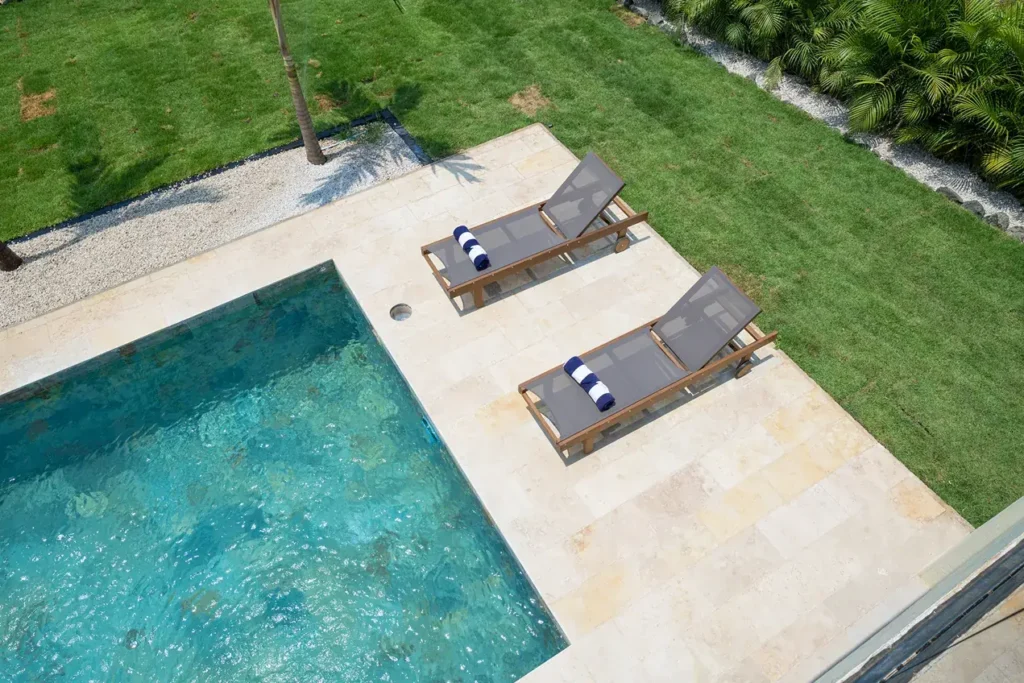
Costa Rica's luxury home tax (impuesto solidario para el fortalecimiento de programas de vivienda, Law 8683) is an annual national tax on homes whose construction value, including fixed and permanent installations, is above ¢143,000,000 for 2026. Once a home crosses that line, the land is added to the value and a progressive rate from 0.25% to 0.55% applies, with payment due by January 15 each year (EY, December 2025; Grant Thornton in La República, January 2026).
This guide explains the 2026 threshold and brackets, what counts toward the value, how a new build or a renovation changes it, how filing and payment work, how it compares with the municipal property tax and what changes when a company owns the home. It is general information, not tax advice: confirm your own position with a Costa Rican accountant.
What is the luxury home tax in Costa Rica?
The tax was created by Law 8683 of December 2008 to fund housing programs for low-income families (Grant Thornton in La República, January 2026). Article 1 of the law makes it a direct tax in favour of the central government on residential property used as a habitual home, for occasional stays or for recreation. That means a holiday home or a home that is rented out is covered too, not only a primary residence (Grant Thornton in La República; AG Legal, April 2026).
It is collected by the Ministerio de Hacienda through the Dirección General de Tributación, not by the municipality. That is the main difference from the ordinary property tax, which is covered further down.
The taxable event is owning the home, or holding a right to use and enjoy it, on January 1 of each year (Law 8683, Article 2). Concession holders and permit holders in the maritime terrestrial zone are also listed as taxpayers (Article 3).
Luxury home tax threshold and brackets for 2026
The threshold and brackets are updated every year for inflation. The 2026 figures were set by Executive Decree 45358-H, published in Alcance 164 to La Gaceta 239 on December 19, 2025, and in force from January 1, 2026 (EY, December 2025).
Exempt amount for 2026: ¢143,000,000. If the fiscal value of the construction, including fixed installations, is equal to or below this figure, the home is not subject to the tax for 2026 (EY; Law 8683, Article 6). For comparison, the 2025 threshold was ¢145,000,000 (Delfino, January 2025).
| Taxable value (colones) | Rate on that portion |
|---|---|
| Up to ¢359,000,000 | 0.25% |
| Over ¢359,000,000 up to ¢720,000,000 | 0.30% |
| Over ¢720,000,000 up to ¢1,081,000,000 | 0.35% |
| Over ¢1,081,000,000 up to ¢1,443,000,000 | 0.40% |
| Over ¢1,443,000,000 up to ¢1,800,000,000 | 0.45% |
| Over ¢1,800,000,000 up to ¢2,162,000,000 | 0.50% |
| Over ¢2,162,000,000 | 0.55% |
Source: EY tax alert on Decree 45358-H (December 2025).
How the brackets are applied
Article 5 of Law 8683 says the scale is applied "en forma progresiva", and EY sets out each band as the excess over the previous one. Read that way, each rate applies only to the part of the value inside its band. As an illustration only, a home with a total fiscal value of ¢500,000,000 would pay 0.25% on the first ¢359,000,000 (¢897,500) plus 0.30% on the remaining ¢141,000,000 (¢423,000), or ¢1,320,500 for the year. Some English language summaries describe the calculation differently, so have your accountant run your own numbers.
The figures are in colones. A home's position against the threshold does not move with the dollar exchange rate, but your cost in dollars does.
What value counts: construction, fixed installations and land
This is where most owners get confused, because the test and the tax use different numbers.
- The threshold test uses construction only. The exemption in Article 6 of Law 8683 looks at the fiscal value of the construction, including fixed and permanent installations. Land is not part of this test.
- Fixed installations are part of the construction. Owners have to value the main house plus accessory structures such as a rancho, pool, walls, internal roads, sports courts, storerooms and parking (La República, 2019; CostaRicaLaw, March 2025; Grant Thornton in La República, January 2026).
- Once construction is over the threshold, land is added. If construction exceeds ¢143,000,000, the owner also calculates the land value, including accessory areas, and the total becomes the taxable base (Grant Thornton in La República, January 2026; CostaRicaLaw; Howler).
- Condominium units add their share of common areas using the ownership coefficient (Law 8683, Article 4).
- Areas used for non-residential purposes are excluded from the base (Article 4).
Values are not your purchase price or an agent's opinion. Article 10 of the law requires the parameters set by Tributación: the Manual de Valores Base Unitario por Tipología Constructiva for buildings, which assigns values per square metre by construction type, and land valuation models for the lot (Law 8683, Article 10; CostaRicaLaw). Hacienda also offers a program on its website to work out a property's construction value (Delfino, January 2025).
How a new build or renovation changes the value
For anyone building, this matters more than the rate. A custom home in the upper mid-range or luxury bracket can cross the ¢143,000,000 construction line on its own, and a pool, rancho and perimeter walls all add to it. Our cost to build a house in Costa Rica guide sets out 2026 construction costs per square metre, but remember that the tax uses Tributación's valuation tables, not your contract price.
- The tax authority hears about permits. Municipalities and the CFIA must report the construction permits they issue and the valuations they make to Tributación (Law 8683, Article 14).
- Values update automatically. Article 4 of Law 8683 says the base updates automatically for the causes listed in Article 14 of the property tax law, Law 7509. One of those causes is building or adding significant improvements that need a construction permit, where the improvement is worth at least 20% of the registered value (Law 7509, Article 14).
- A higher declared value applies at once. If the value you declare is higher than the value on record, it becomes the base for that period (Law 8683, Article 7).
- Timing is set on January 1. The tax is assessed on the home as it stands on January 1 (Article 2). The law does not spell out how a home that is still under construction on that date is treated, so ask your accountant how to handle the January after your build or renovation starts and the January after it finishes.
Renovations follow the same logic. A large addition, a new pool or a guest house can push a home that was below the threshold above it. If you are planning work through our renovation service or adding a pool through our pool construction team, have your accountant check the effect on this tax as part of the budget.
How to file and pay by January 15
The declaration every three years
Owners file a sworn declaration of value every three years, within the first 15 calendar days of January (Law 8683, Article 7). The form is the D-174, Declaración Jurada del Impuesto Solidario, filed in the Oficina Virtual (OVi) of Hacienda's TRIBU-CR platform (Grant Thornton in La República, January 2026; Tico Times, January 2026). According to Grant Thornton, with the last general declaration filed in 2025, the next one is due by January 15, 2028, and the years in between are payment years.
New owners do not wait for the cycle. In Grant Thornton's example, a house bought in October 2025 had to be declared by January 15, 2026, paid in 2027 and declared again by January 15, 2028. A buyer is also jointly liable for the tax of the period in which the purchase happens (Law 8683, Article 7), so ask for the seller's filings and receipts during due diligence.
Paying every year
The tax is paid every year within 15 calendar days of January 1, which in practice means by January 15 (Law 8683, Articles 8 and 9). Payment can be made online through an IBAN account registered in the OVi, or in person at Banco de Costa Rica or BAC branches (Tico Times, January 2026; AG Legal). The Tico Times reported that Hacienda planned no extension for the 2026 deadline.
What happens if you file or pay late
According to Grant Thornton (La República, January 2026):
- Late filing carries a sanction of 50% of a base salary under Article 79 of the tax code, which can be reduced by up to 80% if you correct it before the tax authority acts.
- Interest runs from the original due date.
- Late payment adds 1% per month or part of a month, up to 20% (Article 80 bis).
If a declaration is missing or wrong, Tributación can set the value itself and collect the tax with interest and penalties (Law 8683, Article 11). AG Legal notes that unpaid amounts attach to the property and can affect a sale.
Also see: Property tax in Costa Rica: the 0.25% municipal tax, valuations and the luxury home tax and Build vs buy a house in Costa Rica: a 2026 guide for overseas buyers
Luxury home tax vs municipal property tax
Every property owner in Costa Rica pays the municipal property tax under Law 7509. Owners of homes above the threshold pay both.
| Luxury home tax (Law 8683) | Municipal property tax (Law 7509) | |
|---|---|---|
| Who collects it | Ministerio de Hacienda (Tributación) | The municipality where the property is |
| Who pays | Owners of residential property above the construction threshold | All property owners, with limited exemptions |
| Rate | Progressive, 0.25% to 0.55% for 2026 | A flat 0.25% of the registered value |
| Declaration | Every three years, form D-174 | At least every five years, to the municipality |
| Payment | Once a year, by January 15 | Annual, semiannual or quarterly, as each municipality decides |
Sources: Law 8683, Articles 5, 7 and 9; Law 7509, Articles 16, 22 and 23; EY (December 2025).
Does owning the home through a company change the tax?
No. The tax follows the property. Grant Thornton notes that individuals and legal entities alike are liable, and AG Legal says it applies whatever the ownership structure, including an S.A., an SRL or a trust. The Tico Times explains that the company files the declaration while the tax remains due on the property itself, and Delfino reported that inactive companies that own such homes must pay too (January 2025).
A company adds its own obligations. Corporations also pay the separate annual tax on legal entities under Law 9428, with a deadline at the end of January (Delfino, January 2025). Whether a company structure makes sense for you is a question for your lawyer and accountant, not something to decide because of this tax.
Who is exempt from the luxury home tax?
Article 6 of Law 8683 exempts homes at or below the construction threshold, plus property of the State and municipalities, certain public institutions, declared historic and architectural heritage, property declared of social interest by BANHVI, places of worship and non-profit social welfare entities. Renting a home out does not exempt it: AG Legal notes that short-term rentals above the threshold remain subject to the tax.
A checklist for owners and future owners
- Estimate the construction value with Tributación's tables, including the pool, rancho, walls and internal roads.
- If it is above ¢143,000,000, add the land value and work out the progressive tax.
- Check whether the seller declared and paid, and get the receipts.
- Put January 15 in your calendar every year for payment, and January 15, 2028 for the next declaration.
- After a new build or major renovation, ask your accountant when the new value applies.
- If a company owns the home, confirm who files for it and that its own January taxes are paid.
- Have a Costa Rican accountant confirm the figures before you file.
How Decentra Homes helps
Decentra Homes is a design-build custom home builder in Costa Rica, founded in 2020, with 50+ residential and commercial projects behind us and a showroom in Altos de Flamingo, Guanacaste, open by appointment. We are not tax advisers, but we can give you a clear breakdown of the construction scope, areas and accessory structures of your home, which is the information your accountant needs to value it. Through our custom home construction service you get one team for design, permits and building. Minimum construction budget $350,000 USD, before land. Message us on WhatsApp at +506 8733-2930 or through our contact page.