

Architect cost in Costa Rica: CFIA fees, what they include and how to check a license
In Costa Rica, architects charge a percentage of construction value under the CFIA fee schedule: about 5.5% to 6% for design and plans, plus 3% to 5% to supervise the build.
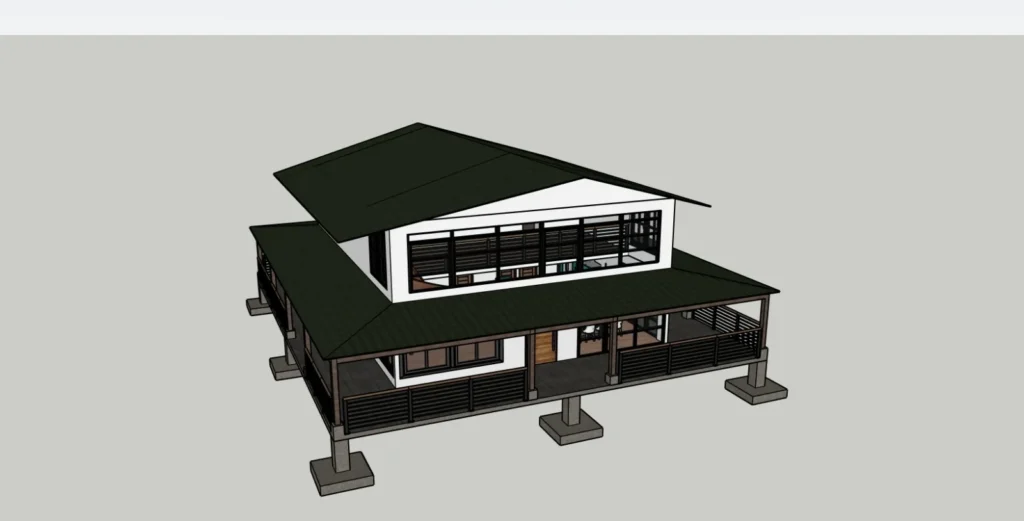
An architect in Costa Rica usually charges a percentage of the construction value, set out in the CFIA fee schedule (arancel). For a new home, design and construction plans come to about 5.5% to 6% of the construction cost, and supervising the build adds roughly 3% for inspection or 5% for full technical direction. On a $500,000 build, that means about $27,500 to $30,000 for design and plans before the first shovel goes in the ground.
This guide explains where those percentages come from, what each stage of the fee includes, how the construction value is measured, which extra costs sit on top of the fee, and how to check that an architect is licensed with the CFIA before you sign anything. It is general information, not legal or tax advice; confirm fees, VAT and permit costs with your architect, attorney or accountant.
How architect fees are calculated in Costa Rica
Architects and engineers in Costa Rica must be members of the Colegio Federado de Ingenieros y de Arquitectos (CFIA). Their fees for building projects follow the Arancel de Servicios Profesionales de Consultoría para Edificaciones, Executive Decree 18636-MOPT, published in La Gaceta in November 1988 and still the reference the CFIA publishes today (CFIA arancel).
The arancel works as a percentage of the estimated value of the work, stage by stage. CFIA's contracting regulation, in force since February 3, 2020, confirms that fees for these services are calculated as a percentage of project value under the arancel, and that the contract amount is tentative and adjusted to the final construction cost (CFIA, Reglamento para la Contratación de Servicios de Consultoría, 2019).
Two rules matter for overseas buyers:
- The estimate has a floor. The cost used to calculate provisional fees cannot be lower than the CFIA's own valuation (valor de tasación) for a project with those basic characteristics (CFIA arancel, Article 3). An architect cannot simply base the fee on an unrealistically low budget.
- Supervision fees follow the final cost. Inspection and technical direction are charged on the final value of the work, which includes the original amount plus extra works, price adjustments and other construction costs (CFIA arancel, Article 3).
CFIA fee schedule: the percentages for each stage
The table below lists the main services in the arancel and the fee for each. Percentages are of the estimated value of the work unless the note says otherwise.
| Service | Spanish name | Fee under the arancel |
|---|---|---|
| Preliminary studies | Estudios preliminares | Not less than 0.5% |
| Preliminary design | Anteproyecto | 1% (1.5% if only this stage is contracted) |
| Construction plans and technical specifications | Planos de construcción y especificaciones técnicas | 4% |
| Budget by units of work | Presupuesto por unidades de obra | 0.5% |
| Detailed budget | Presupuesto detallado | 1% |
| Construction scheduling | Programación de obras | 1% |
| Bid and award advice | Asesoría para licitación y adjudicación | 0.5% of the awarded value |
| Inspection | Inspección | 3% of the final value |
| Technical direction | Dirección técnica | 5% of the final value |
| Administration | Administración | At least 12% of the final value |
Source: CFIA, Arancel de Servicios Profesionales de Consultoría para Edificaciones (Decree 18636-MOPT), Article 4.
Add up the design stages and you get the figure most builders quote. Preliminary studies (0.5%), preliminary design (1%) and construction plans (4%) make 5.5%. Add a budget by units (0.5%) and you reach 6%. That is why we tell clients design and plans run about 5.5% to 6% of construction value.
What an architect's fee includes, stage by stage
The arancel defines each service, so you can see what you are paying for (CFIA arancel, Article 4).
Preliminary studies and preliminary design
The architect studies your needs, the lot and its restrictions, then produces a first layout for discussion. Once you agree on the direction, the anteproyecto adds presentation drawings: floor plans, sections, elevations and a roof plan. This is where most design decisions happen, so take your time here. Changes cost little on paper and a lot once concrete is poured.
Construction plans and specifications
This is the largest design fee, at 4%. It covers the full set of drawings and written specifications needed to build the house under professional supervision: architectural, structural, electrical and mechanical plans. These are the plans that go through CFIA registration and the municipal permit. For larger projects, the arancel requires a separate specifications book.
Budget and scheduling
A budget by units of work prices the house by quantities, such as square meters of slab or wall. A detailed budget goes further, breaking out materials, labor, subcontracts, contingencies and indirect costs. Scheduling covers the critical path, the bar chart and the cash flow. If you live abroad, a clear schedule and cash flow make it far easier to plan transfers.
Inspection or technical direction during construction
Once the build starts, someone has to be legally responsible for the work on site. The arancel offers two levels:
- Inspection (3%) means periodic quality control, progress reports, approval of materials, approval of extra works and invoices, and the final handover.
- Technical direction (5%) includes everything in inspection plus control of the schedule and payments. The director takes on technical responsibility for the work.
CFIA's contracting regulation adds a practical minimum: the inspector or director must visit and control the work at least every seven calendar days, and every change must be noted and technically justified in the official construction logbook (bitácora) (CFIA, Reglamento para la Contratación de Servicios de Consultoría, Article 9).
Architect cost in Costa Rica: a worked example
Here is how the arancel applies to a home with a construction value of $500,000, before land. This is an illustration only. Your architect calculates the actual fee on your project's estimated value.
| Stage | Rate | Fee on $500,000 |
|---|---|---|
| Preliminary studies | 0.5% | $2,500 |
| Preliminary design | 1% | $5,000 |
| Construction plans and specifications | 4% | $20,000 |
| Budget by units of work | 0.5% | $2,500 |
| Design and plans subtotal | 6% | $30,000 |
| Inspection during construction | 3% | $15,000 |
| Or technical direction | 5% | $25,000 |
To estimate the construction value itself, start with our guide to the cost to build a house in Costa Rica.
Costs that sit on top of the architect's fee
The percentage is not the only line in the budget. Ask your architect which of these are included and which you pay separately.
- VAT (IVA). Engineering and architecture services for projects registered with the CFIA moved to the general 13% VAT rate from September 1, 2023, after a transition period under Law 9635 (La República, September 2021).
- The CFIA stamp (timbre). CFIA's contracting regulation says the construction stamp must be added to the fees and paid in full to the Colegio (CFIA, Reglamento para la Contratación de Servicios de Consultoría).
- The municipal building permit. The permit fee is typically 1% of the construction value assessed through CFIA's APC platform (Howler, "Costa Rica building permit process step by step"). Confirm the current rate with your municipality.
- Studies the design depends on. A topographic survey and a soil study are separate contracts. See our guides to the topographic survey and the soil study.
- Water and electricity letters and other permit documents, covered in our permits and water letters service.
Also see: Cost calculator and How much does it cost to build a pool in Costa Rica?
Do architects charge more for renovations?
Yes. Under the arancel, remodeling work is charged at 150% of the normal minimum fee for each stage (CFIA arancel, Article 4). Renovations take more time to measure, document and coordinate around existing structures, and the fee reflects that.
The arancel also lowers fees for repeated designs. If the same client builds the same design several times under one contract, the plan, budget and scheduling fees drop to 60% for the second unit, 50% for the third, 30% for the fourth and 20% for each one after that. Site adaptation is still charged in full, and supervision fees are not reduced (CFIA arancel, Article 5). This matters if you plan a small group of villas on one property.
Can you hire an architect by the hour or for a flat fee?
For services the arancel does not cover, CFIA's contracting regulation allows a lump sum or cost reimbursement plus a fixed fee (CFIA, Reglamento para la Contratación de Servicios de Consultoría, Articles 20 and 21). The arancel also provides an hourly rate for professional consultations, indexed over time (CFIA arancel).
You will see online figures for a flat "plans only" price. One Costa Rican real estate blog puts single-family plans at $3,000 to $10,000 or more (Properties in Costa Rica, December 2024). Treat very low quotes with care. Ask exactly what is included: a full structural, electrical and mechanical set, specifications and a budget, or only architectural drawings for the permit. A thin set of plans saves money at the start and usually costs more in change orders and disputes on site.
How to check that an architect is CFIA-licensed
The professional responsibility of the architects and engineers on a project must be registered with the CFIA (CFIA, Reglamento para la Contratación de Servicios de Consultoría, Article 28). A builder who is not an architect or engineer must have a registered professional who is legally responsible for the project (Tico Times, September 2026). Before you sign:
- Ask for the CFIA membership number (carné) of the architect and of any engineer on the team.
- Look them up in the CFIA directory. The CFIA publishes a Professional and Company Directory on its website, linked from its Practice of the Profession page. Check that the name, discipline and status match.
- Check the company too. The same CFIA directory lists registered companies as well as individual professionals. Ask for the company's CFIA registration number and look it up.
- Insist on a written, registered contract. CFIA's regulation requires the relationship to be set out in writing before any service starts, and the contract only becomes official once it is registered with the CFIA (Reglamento para la Contratación de Servicios de Consultoría, Articles 25, 26 and 35).
- Read the scope and payment terms. The contract should list the scope, the total fees, how they are paid and any reimbursable expenses (Articles 27 and 29). Payments are normally made per stage.
For more on vetting the team that will build the house, see our guide on how to choose a home builder in Costa Rica.
Is it cheaper to use a design-build firm?
The percentages are the same, because the arancel applies whoever you hire. What changes is coordination. When the architect, engineers and builder work for one company, the plans are drawn with the construction budget in mind, and there is one party responsible if something does not fit. When they are separate, you manage the gaps between them, and changes during construction tend to cost more.
A separate inspector still has value on a design-build project if you want an independent check. The arancel treats inspection and technical direction as distinct services, so you can contract them on their own.
How Decentra helps
We are a design-build custom home builder in Costa Rica, founded in 2020, with a showroom in Altos de Flamingo, Guanacaste, open by appointment. Our design and construction are CFIA-licensed under SANYC Ingeniería (CFIA registration CC-10880), and our architect, Sergio Cerceño, is CFIA-licensed. Design and plans run about 5.5% to 6% of construction value under the CFIA fee schedule, and we recommend a 10 to 15% contingency on the build. We build in concrete, hybrid and steel. For new builds: Minimum construction budget $350,000 USD, before land. See our architectural design service, or message us on WhatsApp to talk through your project.