

Termites in Costa Rica: protecting a new home
Termites are common in Costa Rica. A concrete structure gives them nothing to eat, so protect a new home with soil treatment, sealed gaps, treated wood finishes and yearly checks.
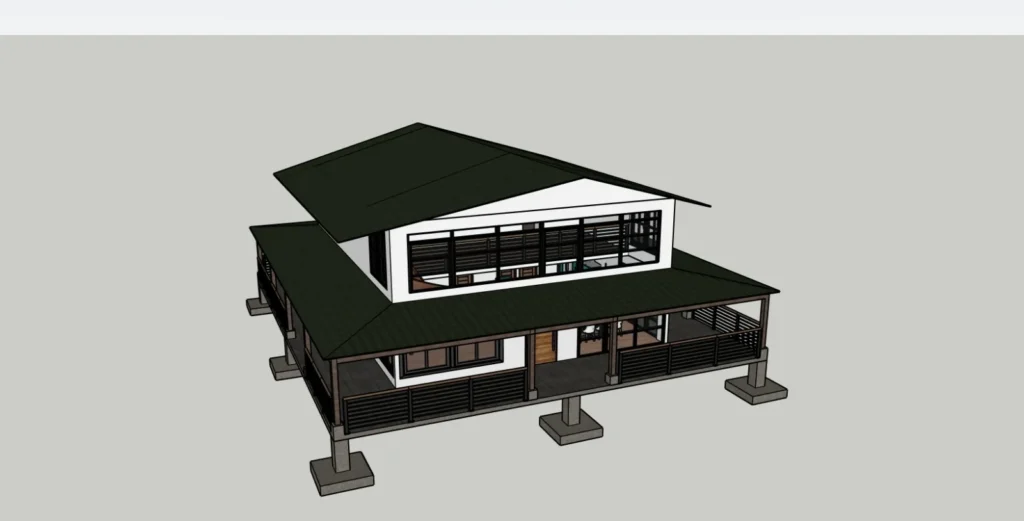
Termites are common throughout Costa Rica, and two groups damage homes: drywood termites, which live inside dry wood such as doors, cabinets, ceilings and furniture, and subterranean termites, which travel up from the soil. A reinforced concrete structure gives them nothing to eat, so in a new home the risk sits in the wood you add and in the gaps that let termites reach it. Prevention during design and construction costs far less than treatment once a colony is established.
This guide covers the termites you will meet in Costa Rica, what they damage in a concrete house, how to prevent them at the design and build stage (soil treatment, barriers, clearances and wood choice), the signs of an infestation, how treatment works and how to hire a licensed pest control company.
What kinds of termites damage homes in Costa Rica?
Locally they are called comején or termitas; Costa Ricans use both words, with comején more common (Tico Times, 2007). Of the roughly 4,000 termite species worldwide, about one in ten is a pest (Tico Times, 2007), and the ones that damage buildings fall into two groups.
| Type | Where it lives | What it attacks | Typical signs |
|---|---|---|---|
| Drywood termite (mainly Cryptotermes brevis) | Inside dry wood above ground, with no contact with soil | Furniture, doors, frames, trim, wood ceilings and decorative beams | Small hard pellets below tiny holes, shed wings, blistered paint |
| Subterranean termites | Colonies in the soil, reaching wood through cracks and gaps | Wood in contact with or close to the ground: wood floors, door frames, decks, stored lumber | Hollow wood, damage found during works, swarms after heavy rain |
| Arboreal termites | Large dark nests in trees | Dead wood outdoors; a reason to keep branches off the house | Nests on trunks and branches near the house |
Researchers at the Instituto Tecnológico de Costa Rica describe the drywood termite Cryptotermes brevis as the most frequent termite problem in Costa Rican construction, affecting structural and decorative wood and furniture (Kurú, Revista Forestal). The University of Florida's entomology fact sheet explains why it is so widespread: it lives in wood that is protected from rain, including houses and furniture, needs little moisture, and travels easily in infested wooden goods.
Subterranean termites have long been a problem in the western Central Valley, particularly in Escazú and Santa Ana, according to a Costa Rican fumigation company quoted by the Tico Times in 2007. The large nests seen in trees across the country are also termites (Howler).
Can termites damage a concrete house?
Not the structure. Concrete, block and steel are not food for termites; our comparison of concrete and steel frame homes on the coast covers how each system handles humidity and salt air. What they can damage in a concrete home is everything made of wood or other cellulose: kitchen and closet cabinets, doors and door frames, wood ceilings and decks, stair treads, trim, furniture, books and cardboard stored in a bodega.
The cost adds up because termites work out of sight. The ITCR researchers note that a drywood colony can take up to three years to develop without visible signs, and that drywood termites colonise wood with a moisture content below 20%, which describes most finished interior wood. The University of Florida fact sheet adds that colonies can live for more than ten years. Even hardwoods are not immune: the ITCR paper reports heavy termite damage at San José's Teatro Nacional, including in cedro amargo, and notes that resistant woods are still colonised when termites have no alternative.
That is the case for building the structure in reinforced concrete and treating every piece of wood that goes into the house as a finish to protect and inspect, not as part of the frame.
How to termite-proof a new house in Costa Rica
Most prevention happens before the floor slab is poured and before the finishes go in. Costa Rica has no termite chapter we can point to in its building rules, so the practical references come from the US Environmental Protection Agency and from Florida's residential building code, written for a climate with the same drywood species.
1. A structure termites cannot eat
A reinforced concrete foundation, frame, walls and slab remove the main food source. Roof structures, pergolas and decks in concrete or metal remove the next one. Where the design calls for wood, for example a wood ceiling under the roof, it should be treated and accessible for inspection.
2. Treat the soil under and around the slab
The EPA describes liquid termiticides applied to the soil as the most common technique against subterranean termites, and notes that physical barriers, such as stainless steel mesh or sands of specific particle sizes, are built in during construction. Florida's code sets the order of work: treat the soil under the slab only after excavation, backfill and compaction are complete, lay a vapor retarder of at least 6 mil over the treated soil, and treat the soil under exterior slabs within 1 foot of the walls (R318). Any product used must be registered with the Ministerio de Salud, as covered below.
3. Close the gaps and leave inspection space
Subterranean termites can reach the house through cracks and utility openings in the foundation, so the EPA recommends sealing them with cement, grout or caulk. Florida's code adds clear rules worth copying:
- Keep exterior wall finishes at least 6 inches (152 mm) above the finished ground.
- Leave a 4 inch (102 mm) inspection space where patio, garage and entry slabs meet the house.
- Keep foam insulation at least 6 inches clear of exposed soil in heavy termite areas.
- Discharge downpipes, AC condensate lines and irrigation at least 1 foot away from the wall.
- Remove all wood forms, grade stakes, spacers, stumps, roots and debris from under and around the foundation before backfilling.
4. Control moisture
Wet wood and wet soil help termites and mould. Grade the ground away from the house, keep gutters and downpipes working, fix leaks quickly, keep vents clear and store firewood and lumber away from the walls (EPA). Our guide to tropical house design in Costa Rica covers overhangs and ventilation that keep finishes dry.
5. Choose and treat the wood you do use
- Species. Dense tropical hardwoods resist termites better than pine and plywood, and bamboo is especially vulnerable, according to a fumigation company quoted by the Tico Times in 2007. Resistance is relative, not a guarantee (ITCR).
- Treatment. The ITCR paper recommends wood preservation, especially pressure treatment, which plants in Costa Rica already offer. Borate solutions sprayed on raw wood are a common preventive measure (University of Florida, EPA). Ask the carpenter or supplier to state in writing what treatment was used.
- Furniture. Inspect second-hand and imported wooden furniture before it comes into a new house; drywood termites spread in infested goods (University of Florida).
| Build stage | Termite step | Who checks it |
|---|---|---|
| Design | Concrete structure, no wood in contact with soil, inspection space at slab edges, accessible ceiling voids | Architect and engineer |
| Foundations | Remove roots, stumps, form boards and stakes; seal pipe penetrations | Site engineer |
| Before the slab | Soil treatment or physical barrier by a licensed company, with a service sheet | Site engineer and owner |
| Finishes | Treated wood only, with written proof; sealed cuts and holes | Site engineer |
| Handover | Clean grading away from walls, downpipes discharging away from the house, no debris left buried | Owner's inspection |
If you are buying an existing home rather than building, a termite inspection belongs in the pre-purchase checks; see our guide to home and construction inspections in Costa Rica.
Signs of termites in a Costa Rica home
- Pellets. Small, hard, six-sided droppings that drywood termites push out of holes about 1 to 2 mm wide, often collecting in small piles below furniture or door frames (University of Florida).
- Wings. Discarded wings near windowsills and light fittings, especially after heavy rain when winged termites swarm (Tico Times, 2007).
- Hollow wood. Wood that sounds hollow or gives way when probed with a screwdriver (EPA).
- Blistered surfaces. Paint or thin wood veneer that bubbles or peels (University of Florida).
Supermarket sprays are made for ants and cockroaches and do not solve a termite problem, a fumigation company told the Tico Times in 2007. If you see any of these signs, call a licensed company.
How termite treatment works in Costa Rica
Treatment depends on the type:
- Drywood termites. For widespread or hidden infestations, the standard method is to tent the building and fumigate it with sulfuryl fluoride, then air it out. Smaller infestations can be treated by drilling into the wood and injecting insecticide into the galleries, or with heat in a single room (University of Florida). The Tico Times reported in 2007 that the fumigant Vikane was widely used in Costa Rica.
- Subterranean termites. Liquid termiticide barriers in the soil and bait systems with cellulose and a slow-acting insecticide are the main options (EPA).
- Infested pieces. Badly damaged furniture, trim or doors are often cheaper to replace than to treat.
Costs vary with the method and the size of the problem. One Osa property manager puts professional pest treatment at $500 to $2,000 depending on severity (Osa Property Management, 2026); get a written quote after an inspection.
Hiring a licensed pest control company
Pest control with professional pesticides is regulated by Executive Decree 38335-S-MTSS, published in La Gaceta on May 6, 2014. Under it:
- The company needs a Ministerio de Salud operating permit (permiso sanitario de funcionamiento), which lasts one year. Ask to see it.
- Every product must be registered with the Ministerio de Salud; unregistered products and agricultural products not authorised for occupied areas are prohibited.
- The company must give you a service sheet for each job with the date, safety measures, re-entry time and the products used, and keep a copy.
- Applicators must be trained and wear protective equipment.
Keep every service sheet with the house documents. If you sell the house, they show the treatment history.
How often should a house be inspected for termites?
Advice varies. An Osa property manager recommends an annual inspection by a licensed company (Osa Property Management, 2026), while a fumigation company quoted by the Tico Times in 2007 recommended preventive treatment twice a year in the tropics. A sensible plan for a new concrete home is a yearly professional inspection, plus a quick check of cabinets, door frames and ceilings by the owner or property manager after the first heavy rains, when termites swarm. Termites are active all year round (Osa Property Management).
How Decentra Homes helps
Decentra Homes is a design-build custom home builder in Costa Rica. We build in concrete first, then hybrid and steel frame; see our construction systems page. Because the structure is concrete, it gives termites nothing to eat, and the steps in this guide can be written into the plans and specifications from the start. Design and construction are CFIA certified under SANYC Ingeniería (CFIA registration CC-10880). If you are reviewing a lot or a design, a consultation with our CFIA-licensed engineer and architect, who have 15 years of experience, costs $200 per hour. Reach us on WhatsApp or through our contact page.