

Cost to build a house in Nosara, Tamarindo, Santa Teresa and Uvita (2026, town by town)
In Nosara, Tamarindo, Santa Teresa and Uvita, land, slope and access, water letters, logistics, crews and local rules are what move the total budget; Decentra's 2026 rates are set by finish level.
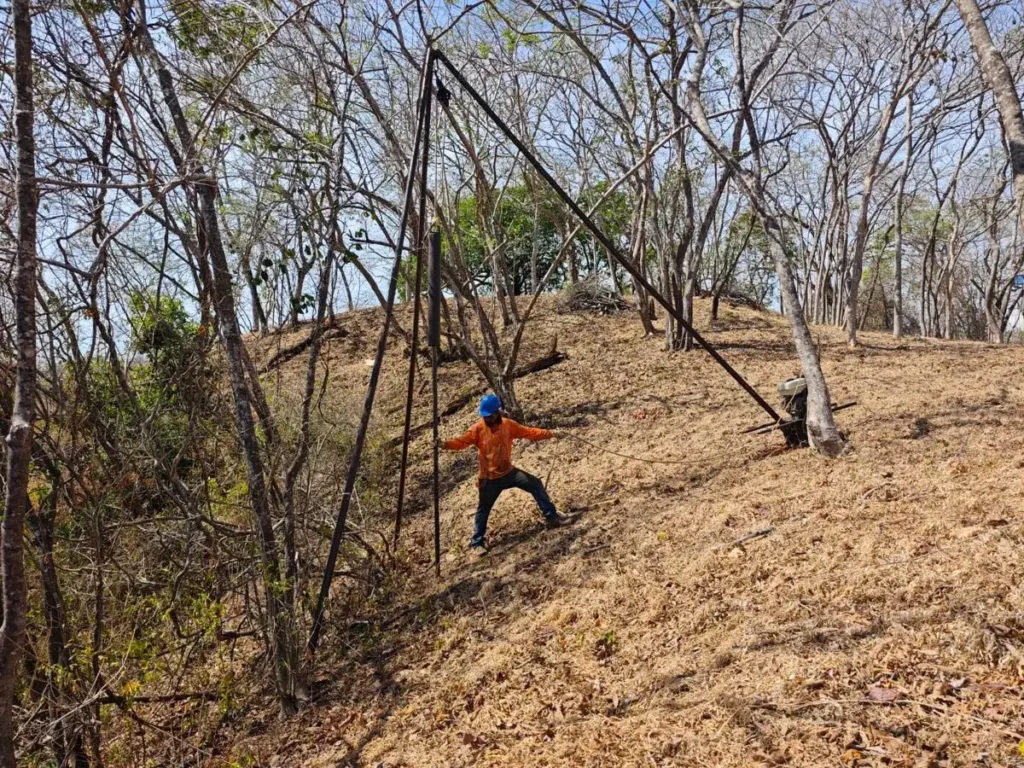
Decentra's 2026 construction figures run from about $700 per m² for a basic finish to $1,800 or more for ultra luxury, before land, and they are set by finish level, not by town. In Nosara, Tamarindo, Santa Teresa and Uvita, what moves the total from one lot to the next is the land, the site work a slope or a rough road demands, how hard the water letter is to get, how far materials and crews travel, and local zoning or HOA rules.
This guide sets out our rates, then compares the four towns on each of those cost drivers, with a public source for every local fact. It ends with a checklist for comparing build budgets on lots in different towns.
How much does it cost to build a house in Nosara, Tamarindo, Santa Teresa or Uvita?
Start with the construction figures. These are Decentra's 2026 figures for construction only, before land, by finish level:
| Finish level | Construction cost per m², before land |
|---|---|
| Basic | About $700 |
| Mid-range | About $1,000 |
| Upper mid-range | $1,000 to $1,200 |
| Luxury | $1,500 to $1,800 |
| Ultra luxury | $1,800+ |
| Pool | About $2,500 per m² of pool, all in |
On top of construction, budget about 5.5% to 6% of construction value for design and plans under the CFIA fee schedule, and a 10 to 15% contingency. A typical build takes 5 to 8 months on site once the permit is issued. Minimum construction budget $350,000 USD, before land (new builds). The full breakdown is in our guide to the cost to build a house in Costa Rica, and the construction cost calculator gives a range for your size and finish.
You will see other figures online. A Tamarindo brokerage put luxury construction at $1,800 to $2,500 per m² as of March 2026 (RPM Real Estate, May 2026), and some guides publish a separate rate for each town. Before you compare any two numbers, ask what they include. Design fees, site work, the pool, permits and contingency are often inside one quote and missing from another.
Town by town: what changes the budget
The per m² rate covers the house. The items in this table sit around it, and they are where the four towns differ. Each point is sourced in the town sections below.
| Town | Permits and local rules | Water | Terrain and access |
|---|---|---|---|
| Nosara | Municipalidad de Nicoya; Ostional refuge buffer limits on coverage, height and lighting | Community ASADAs; several barred from issuing new water letters in 2021, and Playa Nosara still without feasibility in 2024 | Hillside and jungle lots; gravel stretches on local roads |
| Tamarindo | Municipalidad de Santa Cruz; no regulatory plan yet, one expected in 2027 | The over-used Huacas-Tamarindo aquifer; new letters limited | Very little land left in town; paved highway, about an hour from Liberia airport |
| Santa Teresa | Concejo Municipal de Distrito de Cóbano; coastal plan regulates only the beach strip (about 150 m), not the hills | Little public data on the coastal aquifer; confirm the provider lot by lot | Steep hills behind the beach road; a ferry or a long drive for every delivery |
| Uvita | Municipalidad de Osa; no cantonal regulatory plan | Springs in the Fila Costeña, run by ASADAs | Coastal flats below steep ridge lots; Costanera Sur highway from San José |
Building costs in Nosara: water, buffer rules and roads
Most building lots in Nosara sit on the hills and in the jungle behind Guiones and Pelada. Three things move the budget beyond construction.
- Water. Supply comes from community water associations (ASADAs). In 2021 at least 30 ASADAs in Nicoya, including Garza, La Esperanza Sur and Playas de Nosara, did not meet AyA's minimum technical requirements and could not issue water availability letters for new construction under a 2020 AyA regulation (La Voz de Guanacaste, April 2021). In 2024 Playa Nosara was still among the ASADAs without technical feasibility for new water permits (Obtur-UNA data reported by Semanario Universidad, June 2026).
- Buffer rules. A Nicoya regulation for the zone reaching 5 km inland from the limits of the Ostional National Wildlife Refuge caps buildings at 50% of each lot. Semanario Universidad describes the protected area as covering the beaches of Ostional, Nosara, Pelada and Guiones (October 2023), but whether a given lot near Guiones or Pelada falls inside the buffer depends on its distance from the refuge boundary, so confirm it with SINAC and the Municipalidad de Nicoya. The regulation limits height to 9 m in the first kilometer and 12 m in the next four, requires low-voltage exterior lights that cannot be seen from the beach, and requires proper wastewater treatment. The Sala Primera upheld it in a ruling dated June 4, 2026 (Delfino, June 2026). Lower coverage and height shape the design and the earthwork, so check them before you buy.
- Roads. Route 160 has been paved in stages, with delays and failed materials along the way (La Voz de Guanacaste, November 2018), and local groups have pushed for more of the network to be paved (Nosara Civic Association). Plan deliveries, dust control and rainy-season access for the road to your lot.
Permits and lots in detail: building a custom home in Nosara.
Building costs in Tamarindo: land, water and a plan on the way
- Land. Teletica reported in July 2026 that Tamarindo's main street had barely one lot left for sale. Expect to look at lots on the edge of town, on hillsides or inside gated communities, each with its own extra costs: earthwork on slopes, and rules and fees in communities.
- Water. The Huacas-Tamarindo aquifer is the main source for Tamarindo, Cabo Velas and Tempate. In 2016 La Voz de Guanacaste described it as over-used, and reported that SENARA had banned the temporary drilling of new wells in eight aqueducts in Carrillo, Nicoya and Santa Cruz after detecting salt intrusion in this and the Brasilito-Potrero aquifer (May 2016). In 2024, 17 of the 22 coastal water systems in Guanacaste without technical feasibility for new water permits were around Sardinal, Tamarindo, Tempate and Cabo Velas (Obtur-UNA data reported by Semanario Universidad, June 2026). PAACUME, the regional project meant to supply drinking-water aqueducts in Carrillo, Santa Cruz and Nicoya, was 20.8% complete according to SENARA figures reported in May 2026, with completion moved to 2029 (Tico Times, May 2026).
- Zoning. Santa Cruz has no regulatory plan; the municipality expects a coastal and urban plan in the first quarter of 2027 (Teletica, July 2026). Ask the municipality where the draft stands before you buy.
- Access. Liberia International Airport is about an hour away, and a paved highway connects Tamarindo with San José (Wikipedia).
Permits and lots in detail: building a custom home in Tamarindo.
Building costs in Santa Teresa: logistics, slopes and coastal plans
- Logistics. Santa Teresa is about 4 hours by road from Liberia and about 6 hours from San José airport, or a 1.5 hour ferry from Puntarenas to Paquera followed by about an hour's drive (Tico Times, October 2022). In 2024 the Cóbano council reached an agreement to pave streets in a local network of about 218 km, 90% of it ballast and dirt at the time (Tico Times, September 2024). Ferry crossings, longer delivery runs and space to stage materials all belong in the budget.
- Slopes. Hills rise steeply behind the beach road. Cóbano's local administrator has cited tree cutting and the terracing of hillsides as irregular development (El Observador, July 2023). Plan engineered cut and fill, retaining walls and drainage, and expect earthworks to be watched closely.
- Zoning. Permits come from the Concejo Municipal de Distrito de Cóbano. Its local administrator said in 2023 that the coastal plan regulates only development along the beach (150 m), not the hills behind, and that a full regulatory plan was estimated at about three years and ¢150 million (El Observador, July 2023). Inside the coastal plan, limits can be tight: ICT cited a 25% maximum coverage for the low-density residential zone of the Santa Teresa coastal plan (ICT, July 2024).
- Water. Residents challenging the Peñón de Ario coastal plan, which covers the north of Santa Teresa, said in 2023 that there was no SENARA-endorsed study of the coastal aquifer, its depth or its risk of salt intrusion (Semanario Universidad, July 2023). Confirm who supplies the lot and get the letter before you commit.
Permits and lots in detail: building a custom home in Santa Teresa.
Also see: Hidden costs of building a house in Costa Rica and Cost per square foot to build a house in Costa Rica (2026)
Building costs in Uvita: ridge lots, springs and permits
- Slope. Uvita sits on a coastal plain below the Fila Costeña ridge. A 2019 Universidad Nacional study found that 56% of construction permits in the area between 2002 and 2006 were granted in zones of steep slopes and primary forest (Delfino, October 2025). Ridge lots with views need engineered retaining, drainage and access roads.
- Water. The Fila Costeña supplies Uvita and Bahía Ballena through 60 registered water uses, 58 of them springs, managed by 18 ASADAs (Delfino, October 2025).
- Zoning. Osa has no cantonal regulatory plan; UCR's Kioscos program says it has been pending for more than three decades. The canton recorded a record 533 construction permits in 2022, and the CFIA's 2024 report on unpermitted work found 35% of construction in Osa operating without a municipal licence (Delfino, October 2025). Check the permit history of any lot with existing work on it.
- Access. Uvita is about 175 km from San José, 3.5 to 4 hours by Route 27 and the Costanera Sur, and about 280 km and 5 to 6 hours from Liberia (Costa Rica Divers, November 2025).
Permits and lots in detail: building a custom home in Uvita.
Land prices in Nosara, Tamarindo, Santa Teresa and Uvita
Land is where the towns differ most, and dated public data are thin. Most figures you will see are asking prices or broker estimates. What we could confirm:
- On the Guanacaste coast, the Tico Times reported a 400% surge in coastal property prices between 2020 and 2023, citing the Observatory of Tourism, Migrations and Sustainable Development (March 2025). The article does not break the figure down by town or say how it was measured, and Santa Teresa and Uvita are outside Guanacaste, so treat it as a broad signal, not a land price for any lot.
- In Costa Ballena, which includes Uvita, the median price of land sales with disclosed prices in the first half of 2026 was $87,500 across 14 sales. Prices ran from about $13,300 per acre for a large tract to more than $500,000 per acre for a small development-ready parcel (Osa Tropical Properties, July 2026).
We found no comparable, dated land figures for Nosara or Santa Teresa. For any lot, ask your agent and attorney for recent closed sales nearby, not only listings, and weigh the price against the cost of making that lot buildable.
Labour and crews on the coast
Construction workers on the Guanacaste coast usually come from San José or Nicaragua, according to workers and residents interviewed by Semanario Universidad (republished by Q Costa Rica, November 2023). Santa Cruz, the canton that includes Tamarindo, has ranked among the top three cantons for new square meters built for four years running (CFIA data cited by Teletica, July 2026), so good crews are in demand. In busy or remote towns, builders commonly bring crews in and house them near the site, which adds travel, lodging and supervision. Ask whether a quote includes them.
Gated community rules near these towns
Many of the lots on this coast, including the gated communities around Tamarindo and Nosara, add a private design approval and their own fees on top of the municipal permit. Before you buy in any community, get the reglamento, the design guidelines and the construction rules, and price what they require. They can set size, height, style, working hours, deliveries and fees.
Checklist: comparing build budgets for lots in different towns
- Price the house at one per m² rate for your finish level on every lot, so the comparison is fair, then list site costs separately.
- Get a topographic survey and a soil study for each lot you are serious about. Slope and soil set the retaining walls, foundations and earthwork.
- Get the water letter, or at least confirm the provider and its status for new connections, before you sign.
- Check local rules for each lot: coverage, height, setbacks, the coastal plan or buffer zone, and any HOA guidelines.
- Price access: the road in the rainy season, truck access to the building pad, and ferry or long-haul delivery.
- Ask how crews will be housed and transported, and who pays.
- Add design at about 5.5% to 6% and a 10 to 15% contingency to every option.
- Compare the totals, land included, not the construction rate alone.
How Decentra helps you compare towns
Decentra Homes is a design-build custom home builder in Costa Rica, founded in 2020 and CFIA-licensed under SANYC Ingeniería (CFIA registration CC-10880), with 50+ residential and commercial projects. We build in concrete first, and in hybrid and steel frame. If you are choosing between lots, our construction consulting costs $200 per hour, and every consultation is with a CFIA-licensed engineer and architect with 15 years of experience. Minimum construction budget $350,000 USD, before land, for new builds.
Visit our showroom in Altos de Flamingo, Playa Flamingo, by appointment, or send us the lots you are considering on WhatsApp at +506 8733-2930.