decentrahomes.com

decentra mobile logo
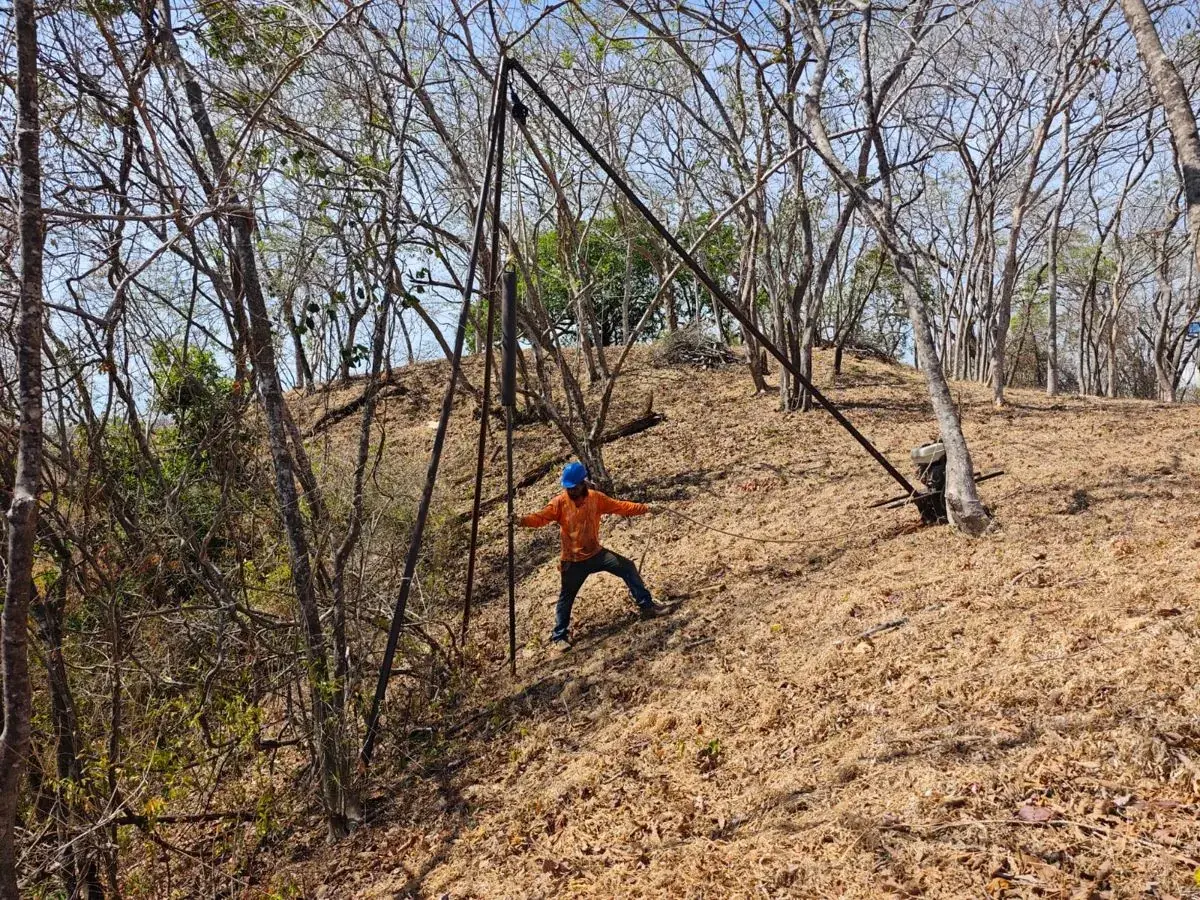
Surveyor in a hard hat and orange shirt beside a tripod on a steep, dry hillside among leafless trees

Development feasibility studies in Costa Rica

A development feasibility study tells you, before you buy land or pay for full design, whether a property in Costa Rica can legally and physically carry the project you have in mind, what it would cost to build and how long it would take. Decentra Homes prepares it for landowners and investors, with a CFIA-licensed engineer and architect with over 20 years of experience leading every study. You get a written report and a clear recommendation: go ahead, adjust the project, or walk away.

What a feasibility study answers

A good study answers five plain questions before you commit real money:

  1. Can I build it here? What the title, the zoning and the environmental rules allow on this lot.
  2. Can I get water and power? Whether a water letter and a power connection are realistic.
  3. How much can I build? The buildable area, the number of units and how they fit the slope.
  4. What will it cost? A construction budget built on our real per m2 figures.
  5. How long will it take? Design, permits and construction, step by step.

It does not forecast rental income, sale prices or returns. Those depend on the market and on how you run the property, and we will not put numbers on them. What we give you is the cost and schedule side, which you or your advisers can set against your own market data.

Who a feasibility study is for

  • Landowners who hold a lot and want to know what it can carry before they hire a design team.
  • Buyers who are about to sign for a property and want the risks found first.
  • Investors planning villas, multi-unit or small hospitality projects who need a defined program, a cost plan and a schedule.
  • Owners abroad who cannot walk the land often. See building from abroad.

For the wider picture of developing with us, from land to construction, see build and develop in Costa Rica. We can also source land for larger developments: we work directly with landowners and have a large network across Costa Rica.

What a feasibility study covers

Land and title

We review the title and the registered survey plan (plano catastrado) with your attorney, and check that boundaries, area and access on paper match the land. Title opinions are your attorney's work; we flag what we see.

Zoning and plan regulador

Under the Urban Planning Law (Ley 4240), municipalities plan and control urban development through their plan regulador, and property owners must get a municipal certificate that confirms the planned use fits the zoning (uso de suelo). We read the plan and the certificate for coverage, setbacks, height and allowed uses. Not every canton has one in force: Santa Cruz, which includes Tamarindo, expects to present its coastal and urban plan in the first quarter of 2027. In those cases we check which rules apply instead.

Coastal land and the maritime zone

The maritime zone runs 200 meters inland from the coast. Nothing can be built in the first 50 meters, the public zone. The next 150 meters are held by concession, not title, and a concession can only be granted where a plan regulador exists. Foreigners need at least five years of legal residency to hold one, and companies must be at least 51% Costa Rican owned. We check whether any part of your lot falls inside it.

SETENA environmental viability

SETENA, the national environmental technical secretariat, reviews the environmental impact of projects. The process starts with an environmental evaluation form (D1 or D2), and SETENA then decides the level of study required. Environmental viability is not a building permit on its own; the project still needs its other permits. We tell you which path your project is likely to follow and what it adds to the schedule.

Water availability

Water is often the deciding item. AyA rejected 22% of the water capacity requests it received in 2023, and in 2024, 22 community water systems on the Guanacaste coast could not approve new connections. We check the source, the provider and the letter before anything else is spent. See permits and water letters.

Access, utilities and site studies

We look at road access, power, drainage and slope. Rivers and streams carry protection areas under article 33 of the Forest Law: 15 meters in rural zones and 10 meters in urban zones on flat ground, 50 meters on rough ground, and a 100 meter radius around permanent springs. Where the site needs it, we order a topographic survey and a soil study.
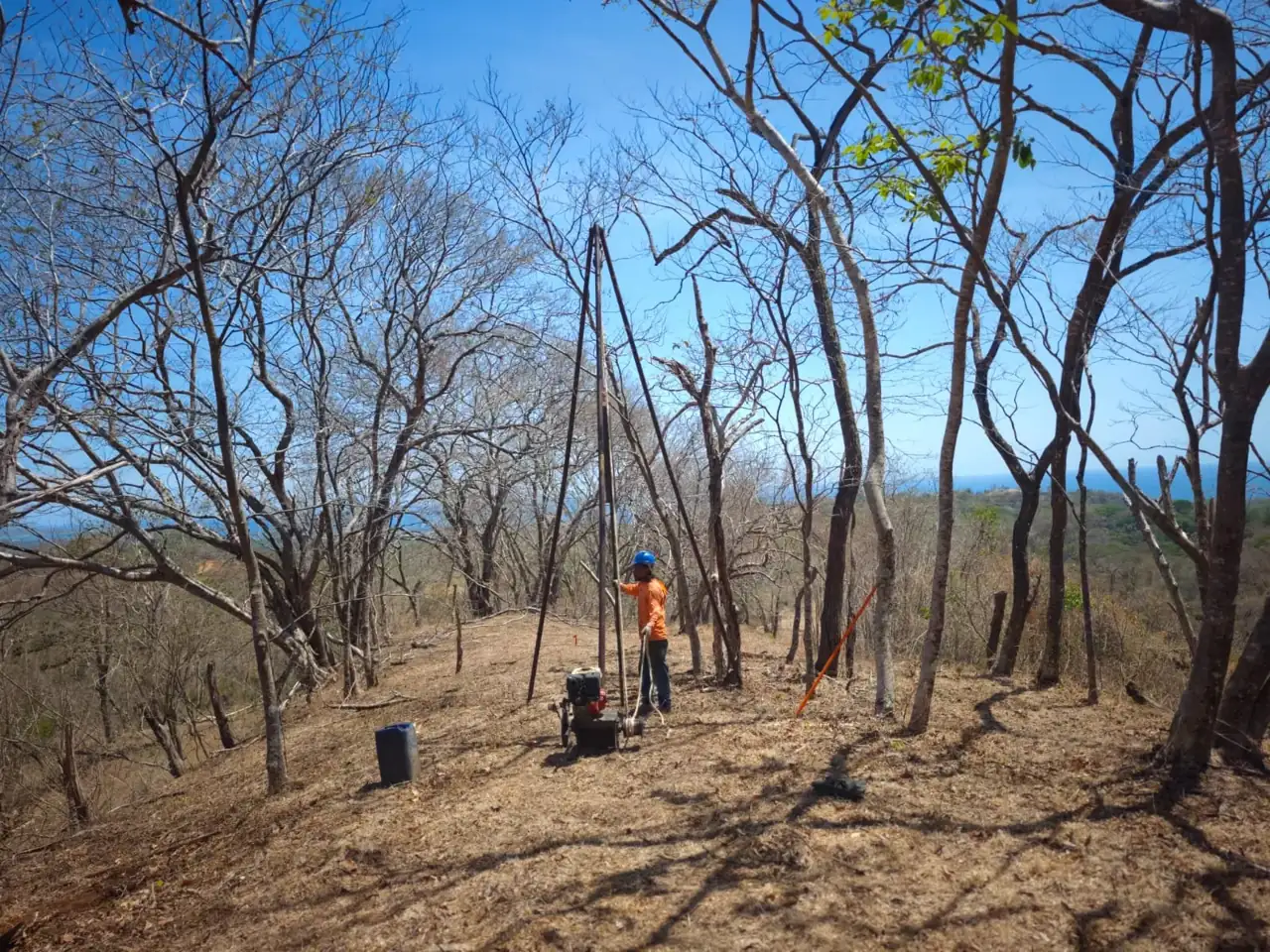
Drilling tripod set up on a dry forest lot with a crew member working beside it and the ocean visible through bare trees

Concept design, density and cost plan

Once the limits are known, our architect sketches what fits: the buildable footprint, the number of units or rooms, parking, pools and how the buildings sit on the slope. This is a concept, not full design, and it is enough to price.

The cost plan uses Decentra's construction figures per m2, before land:

Finish levelCost per m2
Basicabout $700
Mid-rangeabout $1,000
Upper mid-range$1,000 to $1,200
Luxury$1,500 to $1,800
Ultra luxury$1,800+

Pools are about $2,500 per m2 of pool, all-in. Design and plans run about 5.5% to 6% of construction value under the CFIA fee schedule, and we add a 10 to 15% contingency. To build with Decentra, the minimum project budget is $350,000 USD in construction, before land.
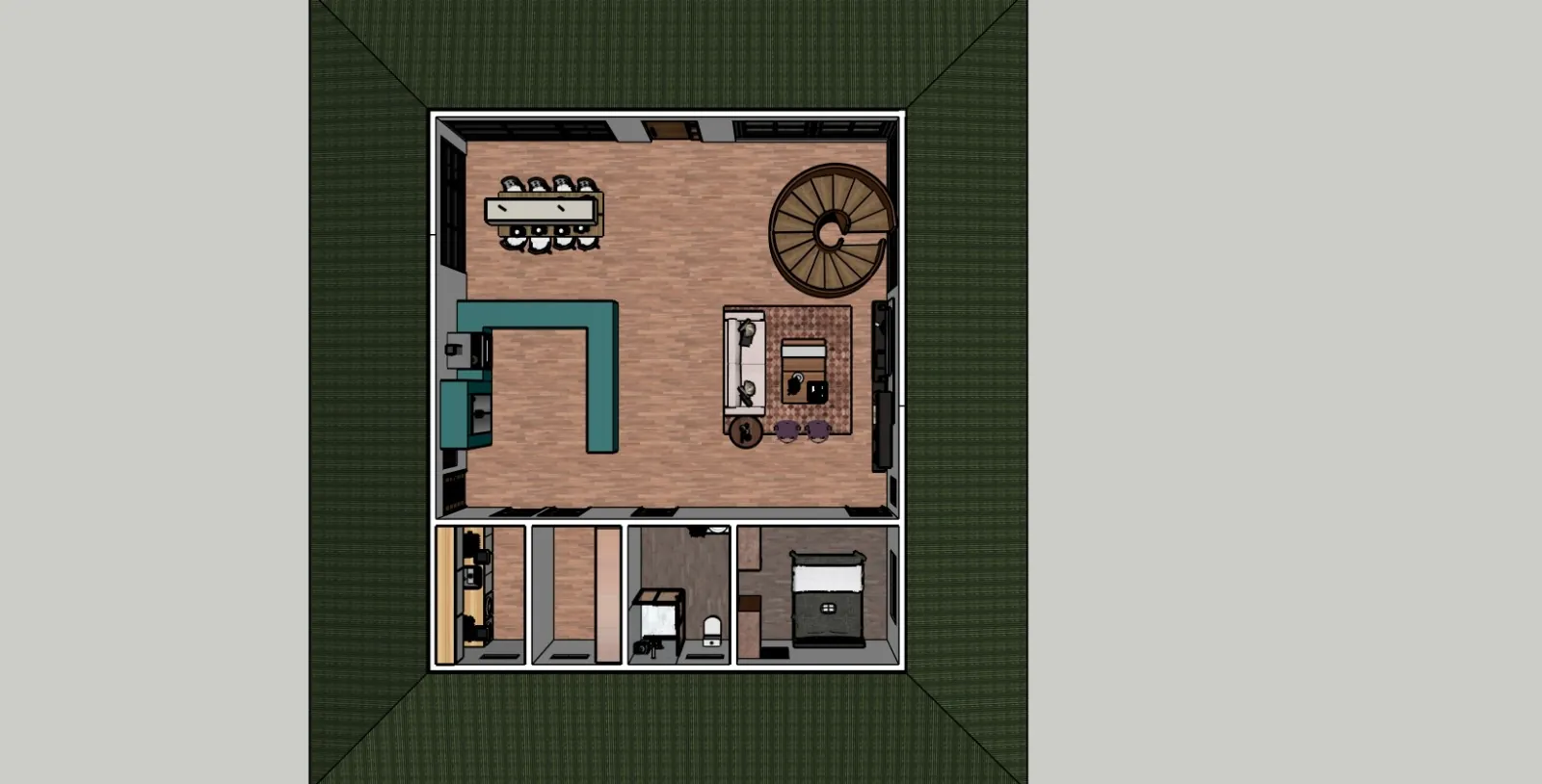
Rendered top-down floor plan showing a dining table, kitchen, living area, spiral stair and bedrooms

Single home or multi-unit: how the scope changes

The same questions apply to a single villa and to a group of units, but the depth changes.

ItemSingle homeVillas or multi-unit
Zoning checkAllowed use, coverage, setbacks, heightThe same, plus density and number of units allowed
WaterOne connectionSeveral connections, often the deciding item
Environmental pathConfirmed for the lotReviewed in more depth, with schedule impact
Concept designOne house on the slopeUnit mix, parking, shared areas, phasing
Cost planOne budgetBudget per phase, with scenarios

For multi-unit work, we also look at how the project could be built in phases, so you are not carrying the full budget before the first units are finished.

How the study runs

  1. Intro call. You tell us where the land is, its size, what you want to build and your budget range. A video call works fine.
  2. Documents. You send what you have: title details, the survey plan, any land use certificate, water letter or earlier studies.
  3. Desk review. We check the documents and the public records, and list what is missing.
  4. Site visit. Our team walks the land, with drone and ground footage for owners who cannot be here. We order a survey or soil study if needed.
  5. Report and review call. We send the report and go through it with you, item by item.

The time this takes depends on the land and on how quickly outside offices answer, so we confirm it when we scope the job.

Schedule, scenarios and sensitivity

The schedule sets out each stage: remaining due diligence, design, permits, the water letter, any SETENA review and construction. For a single home, our construction typically takes 5 to 8 months on site once permits are in hand. Larger or phased projects get their own schedule.

We then test the plan. Typical scenarios are a different finish level, fewer or more units, phasing the build, or a different construction system; we build in concrete, hybrid and steel. Sensitivity checks show what happens to cost and time if a key item moves, such as a delayed water letter or a deeper foundation after the soil study. The point is to see where the project is fragile before you are committed.

We do not prepare profit projections, rental forecasts or return figures.

What you receive

  • A written report with findings on title, zoning, coastal and environmental rules, water, access and site conditions
  • A list of open risks and who resolves each one
  • A concept layout showing what fits on the land
  • A construction cost plan at Decentra's figures, with contingency
  • A stage by stage schedule
  • Scenarios and sensitivity checks
  • A recommendation: go ahead, adjust, or walk away
  • A review call to walk through the report

How pricing works

Feasibility is part of our construction consulting, available anywhere in Costa Rica for projects of any size. Every consultation is with a CFIA-licensed engineer and architect with over 20 years of experience.

Consulting is from $300 per hour, or quoted by job specifications once we know the land and the project. Topographic surveys, soil studies and other studies are paid separately.

For a single lot before purchase, see land and construction consulting. For hotels, villas and multi-unit buildings, see commercial construction. Write to info@decentrahomes.com or message us on WhatsApp at +506 8733-2930.

Google reviews

5.0★★★★★12 Google reviewsSee all reviews on Google (opens in a new tab)
★★★★★

“We have had a great experience with Decentra. Their follow up skills are impeccable and they are a one stop shop for all phases of your build.”

James Whitley 5-star Google review Read it on Google (opens in a new tab)
★★★★★

“I engaged with Sean and the owner Sergio to obtain building costs for a residential project I was considering in the mountains of the Central Valley. I found them to be very welcoming, informative, accommodating…”

Paul Ziman 5-star Google review Read it on Google (opens in a new tab)

Feasibility studies questions

What is a development feasibility study in Costa Rica?

A study that checks whether a property can legally and physically carry a project, and what it would cost and how long it would take. It covers title, zoning, environmental rules, water, access, site studies, a concept layout, a cost plan and a schedule.

Do I need a feasibility study before buying land in Costa Rica?

It is not required by law, but it is the cheapest point to find a problem. Water, zoning or coastal rules can stop a project, and they are much easier to deal with before you sign.

What is uso de suelo and why does it matter?

It is the municipal certificate confirming that the use you plan fits the zoning, required under article 28 of the Urban Planning Law. It sets what you can build and where.

Can foreigners develop land in Costa Rica?

Yes. Foreigners have the same individual rights as Costa Ricans under article 19 of the Constitution, with exceptions set by law. The maritime zone is the main one: concessions there require five years of residency or a company at least 51% Costa Rican owned.

Do I need SETENA approval for my project?

Many projects start with an environmental evaluation form, and SETENA decides the level of study needed. Environmental viability is not a building permit on its own. We tell you which path your project is likely to follow.

Will the study tell me how much rental income I will make?

No. We do not forecast rental income, sale prices or returns. We give you the cost, schedule and risk side, which you can compare with your own market data.

How much does a feasibility study cost?

Consulting is from $300 per hour, or quoted by job specifications. Surveys and soil studies are paid separately.

Do I have to build with Decentra after the study?

No. The report is yours. Consulting has no minimum, while building with Decentra starts at $350,000 USD in construction, before land.

Tell us about your project

The fastest way to reach us is WhatsApp. Or send the form and we reply within one business day.

Minimum construction budget $350,000 USD, before land

Showroom
Altos de Flamingo, Playa Flamingo, Guanacaste, Costa Rica, by appointment
Licensing
CFIA certified under SIM SRL

Minimum construction budget: $350,000 USD, before land. We reply within one business day.

WhatsApp