

Prefab homes in Costa Rica: steel frame, modular, container or concrete
In Costa Rica the prefab option that works best for a custom home is a prefabricated galvanized steel frame, cut to your plans and finished on site; modular and container homes need the same CFIA plans and permits and save less than they promise.
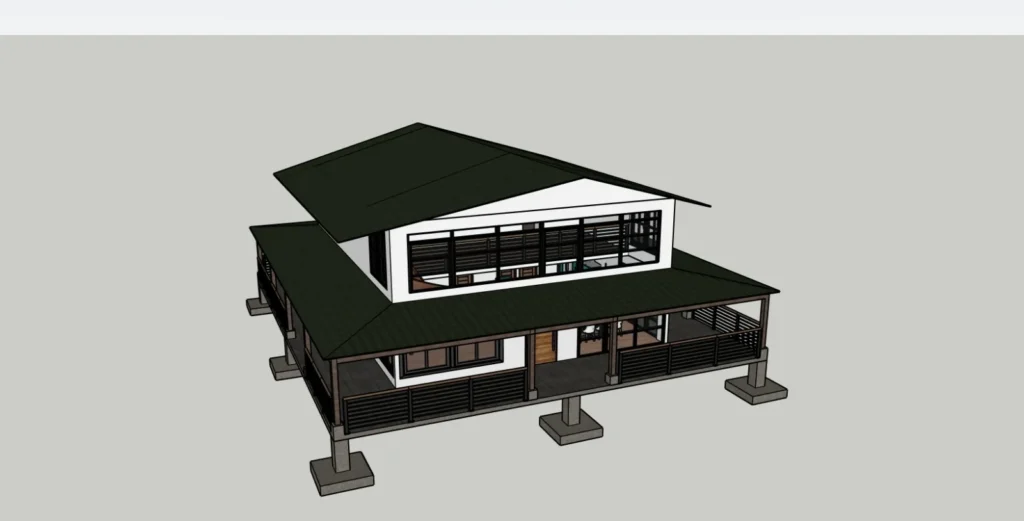
Prefab, modular and container homes promise a faster, cheaper house. In Costa Rica some of that holds up and some of it does not. At Decentra Homes, prefab means one thing: galvanized steel frames, made to your plans, pre-cut and pre-punched, then assembled and finished on site. We do not sell pre-built modular units or container homes. This guide covers: what each option is, which permits apply, what the price leaves out and when a custom build makes more sense.
What the terms mean
- Prefab or kit homes arrive as parts, such as wall panels, frames or structural insulated panels (SIPs), and are assembled on a foundation on site.
- Modular homes are built as finished sections in a factory and set on site. One Costa Rican example, the Kabëk model by úbáli tropical living, uses a lightweight metal frame with industrial zinc cladding and gypsum interior walls, and its maker cites about 7 weeks of installation once permits are in place (designboom).
- Container homes reuse 20-foot or 40-foot shipping containers, alone or joined, from about 15 m² up to multi-level buildings (La Nación, October 2025).
All three still need a foundation, utility connections, a septic or treatment system and permits. The factory part is the structure and some finishes, not the whole project.
Prefabricated steel frames: the prefab we offer
A prefabricated light-gauge steel frame gives you most of the speed of prefab without the limits of a catalog home. Every wall panel, joist and roof truss is calculated from your architect's plans, cut and pre-punched for wiring and plumbing at the factory, and labelled for assembly. The frame goes up quickly on site, and the rest of the house (foundations, roof, windows, finishes, pool) is built for your lot like any custom home. Galvanized steel resists rust in salt air, and termites and rot do not affect it. See our galvanized steel frames page for how ordering works.
Do prefab and container homes need a permit in Costa Rica?
Yes, the same permits as any other house. In March 2024 the CFIA publicly reminded buyers that modular prefabricated homes need a construction permit, after companies advertised online that their houses needed none and could be placed anywhere (Delfino, March 2024). In 2025 the CFIA's executive director told La Nación that container homes need the same permits as traditional construction.
In practice that means:
- a land-use certificate (uso de suelo) for the lot, and a design that respects it
- plans signed by CFIA-registered professionals and registered with the CFIA, covering structural, electrical, plumbing and geotechnical design
- proof of drinking water, sanitation, storm drainage and electricity
- a municipal building permit, the tax on the value of the work and an INS workers' risk policy
- compliance with the Seismic Code, the plumbing and sanitary code and the Electrical Code
The site has to be leveled, the foundation designed for earthquakes and the home properly anchored to it (La Nación, 2025). A kit designed for another country is a starting point. A local engineer still has to check it against Costa Rican codes and sign the plans. Our permits and water letters page explains the process.
What a prefab or container home really costs
One container builder quoted by La Nación put container homes at about $650 to $700 per square meter (October 2025). That figure is for small, basic homes and comes from a builder, not an independent survey. It is close to what a basic site-built concrete home costs with us, about $700 per square meter, before freight, a crane or extra insulation are added to the container.
The price of a kit rarely covers the whole job. Budget separately for:
- freight from the port and the last stretch to the lot, which may need a crane and a road a truck can climb
- the foundation, site work and any retaining walls
- water, electricity and septic connections
- design and engineering, about 5.5% to 6% of construction value under the CFIA fee schedule, plus the municipal permit at about 1%
- insulation, roofing and shading to make a metal structure comfortable in the tropics
- a 10 to 15% contingency
The saving also shrinks as the house gets better. In a luxury or ultra luxury home, at $1,500 to $1,800+ per square meter, much of the budget goes to glass, finishes, terraces and the pool, which cost the same whatever the frame is made of. Our cost to build guide sets out the full ranges.
Is a prefab home faster to build?
On site, often yes. La Nación reported that a 60 m² block house can take 5 to 6 months depending on the weather, while container builders claim about 2.5 months for the same size. But the slow parts of a Costa Rica build are rarely the walls. The water letter, the survey, CFIA registration and the municipal permit take the same time for every system, and no kit can be installed until they are done.
Climate checks: heat, rain, salt air and wind
- Heat. Metal absorbs heat, and a container apartment resident told La Nación that heat builds up inside. The well-known Containers of Hope home near San José dealt with it through a raised, slanted roof that draws air through the house, large clerestory windows and industrial insulation (Dwell).
- Humidity and leaks. Joints between modules and roof penetrations need careful detailing for tropical rain. The same resident had heard of neighbors with humidity and leaks.
- Salt air. Near the ocean, any exposed steel needs a proper coating system and details that stop water from sitting on it.
- Wind. In the Gulf of Papagayo, dry-season winds average about 72 km/h over the water, with gusts near 110 km/h, so roofs and connections must be designed for uplift.
- Wood and termites. Owners on expat forums report that wood-based kits need treatment and regular maintenance, especially in humid areas.
None of this rules a system out. It means the home has to be engineered for its site, which is the same work a custom build starts with.
Prefab, container or custom build: a comparison
| Factor | Prefab or modular kit | Container home | Custom build (concrete, hybrid or prefab steel frame) |
|---|---|---|---|
| Permits | Same as any house | Same as any house | Same as any house |
| Design freedom | Set by the catalog and module sizes | Set by container widths and lengths | Designed for your site, views and rooms |
| Sloped lot | Needs a level platform or engineered base | Needs a level pad or piers, plus crane access | Foundations and levels designed around the slope |
| Time on site | Shorter once permits are in | Shorter once permits are in | 5 to 8 months on site for most of our homes |
| Cost per m² | Lower for small, basic homes; extras add up | Builder-quoted $650 to $700 for basic homes | About $700 to $1,800+ per m² by finish level |
| Coastal durability | Depends on materials and detailing | Needs corrosion protection and insulation | Specified for the site from the start |
| Large openings and luxury finishes | Limited | Limited; openings in container walls need structural reinforcement | Yes |
When a custom build makes more sense
- Your lot slopes. Many ocean-view lots are hillside sites that need engineered foundations and retaining walls whatever sits on top.
- You want large glass openings, long spans, cantilevers or a pool tied into the structure.
- The lot is in a community with design rules. In Las Catalinas, for example, every design must pass the town's Architectural Review Board.
- You plan to stay for the long term or resell, and want a home that buyers and appraisers see as standard construction.
- Your budget is in the luxury range, where the frame is a small share of the total.
We build in concrete, hybrid and prefabricated steel frame, not pre-built modular or container homes. Concrete is our first choice on most sites. Steel framing goes up faster than masonry, while masonry needs less maintenance on the coast (Ticonstru), so the right answer depends on the lot and the design. We compare the options on our construction systems page. Minimum construction budget: $350,000, before land.
When a prefab or container home can work
- A small guest studio or office next to a main house, if the land-use certificate and water letter allow another unit.
- A flat lot with easy access, where a truck and crane can reach the pad.
- A simple home on a tight budget, smaller and plainer than a custom build.
If you go this way, hire a CFIA-registered architect or engineer before you order anything, confirm the uso de suelo and the water letter first, and ask the supplier for structural calculations your engineer can check against the Costa Rican code.
Questions to ask any prefab or container supplier
- Which CFIA-registered professional will sign the plans in Costa Rica?
- Has this model been permitted and built in Costa Rica, and where can I see one?
- What exactly is in the price: foundation, freight, crane, installation, utilities, permits?
- What are the insulation and roof specifications for heat and rain?
- How is the steel protected against corrosion, and what does the warranty cover?
- How are the modules connected to each other and anchored to the foundation?
Whatever you build, start with the lot. Our land and construction consulting checks the survey, soil, zoning and water letter before you buy, and our architectural design team can show you what a custom home on the same lot would involve.