

How long does it take to build a house in Costa Rica?
Building a custom house in Costa Rica usually takes about 12 to 24 months from the start of design to the keys, of which construction itself is typically 5 to 8 months on site for most of our homes; the rest is land checks, design and permits.
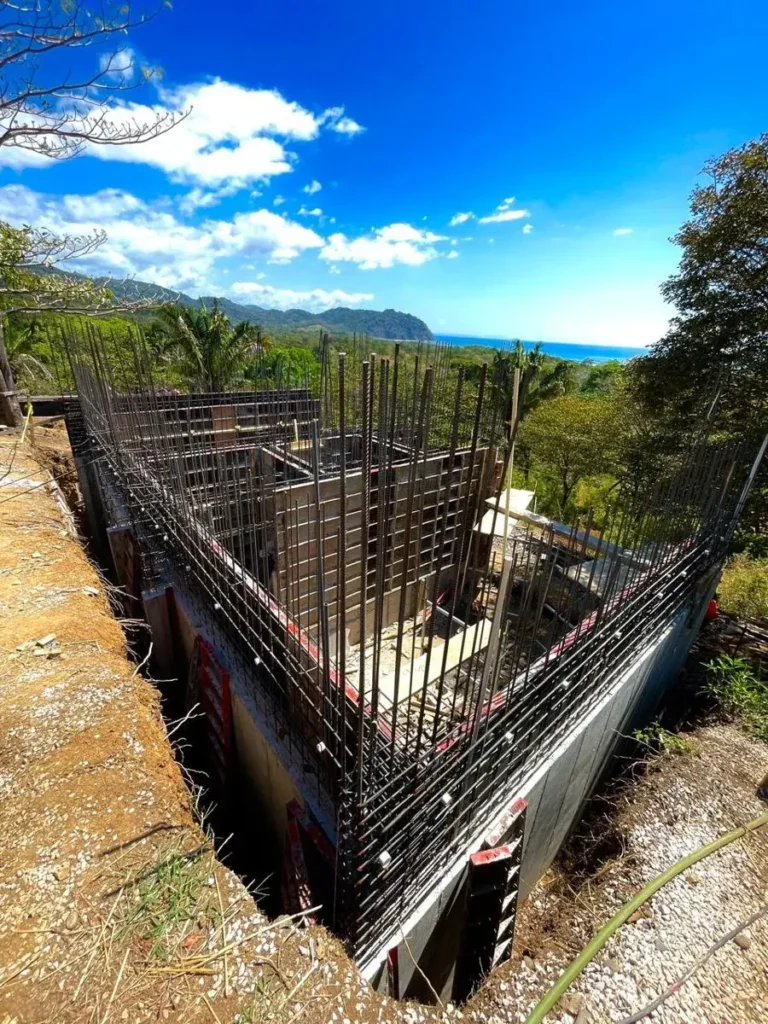
Building a custom house in Costa Rica usually takes about 12 to 24 months from the start of design to the keys (Ticonstru, 2026). Construction itself is the shorter part: most of our homes are completed in 5 to 8 months on site. The rest of the time goes on checking the land, designing the house, and getting the water letter, the CFIA plan registration and the municipal permit in place.
That gap surprises many buyers from the USA, Canada and Europe. A builder who promises "six months" is usually talking about construction only. This guide breaks the whole timeline into phases, shows what sets the pace of each one and explains how to shorten it.
Timeline at a glance
| Phase | Typical time | What sets the pace |
|---|---|---|
| 1. Land checks and purchase | About 30 to 60 days for due diligence | Title, survey plan, water, access |
| 2. Surveys and design | Depends on scope and how fast you approve each stage | Topographic survey, soil study, revisions |
| 3. CFIA plan registration (APC) | Often weeks rather than months | Complete plans, water confirmation |
| 4. Environmental review (if required) | None for many homes; D2 adds 2 to 4 months; D1 adds 6 to 12 months | Location, size, protected areas, coast |
| 5. Municipal building permit | From one day in some cantons to several months in others | Municipality, completeness of the file |
| 6. Construction | 5 to 8 months on site for most of our homes | Size, system, access, weather, materials |
| 7. Handover | Depends on the punch list | Outstanding items, utility accounts, final inspection |
Sources for the ranges are given in each section below. Phases 1 to 5 are where schedules slip. Phase 6 is where most people focus.
Phase 1: land checks and purchase
Due diligence on a lot, covering title, surveys and technical checks, typically takes 30 to 60 days (Ticonstru, 2026). It is the cheapest time in the whole project to find a problem. The items that most often stop a build later are:
- Water. No water letter, no permit. Getting confirmation from AyA, the local ASADA or a well concession is often the longest lead item in the permit process (Ticonstru, 2026). A new well concession alone takes about 12 to 18 months (Invicta Legal).
- Title and survey plan. The plano catastrado must match the registry and the ground.
- Land use. The municipal land-use certificate (uso de suelo) sets what and how much you can build.
- Access, slope and drainage. Difficult terrain can mean grading and retaining walls (Ticonstru, 2026).
- The maritime zone. Coastal lots inside the zone carry extra rules and reviews.
Construction "can be held up for weeks, months, or even indefinitely" when one of these issues is missed (Two Weeks in Costa Rica, 2025). Our land and construction consulting checks each item and gives you a written report before you buy. If water is uncertain, our guide to the water letter and permits explains your options.
Phase 2: surveys and design
Design starts with two studies: a topographic survey, so the house fits the levels of the lot, and a soil study, so the engineer can size the foundations. Then a CFIA-licensed architect works through three stages:
- Concept and 3D model that you review and approve.
- Construction plans: architectural, structural, electrical and plumbing.
- A detailed budget based on those plans.
How long design takes depends mostly on you. One Costa Rica builder quotes about 4 to 8 weeks for design (Ticonstru); in practice, every round of changes adds time. Design and plans cost about 5.5% to 6% of construction value under the CFIA fee schedule.
The decision that saves the most time later is to finish design properly before the permit. Changes after permitting require revised drawings and a new submission to the CFIA and the municipality (Ticonstru, 2026). See our architectural design service for how we run this stage.
Phase 3: CFIA plan registration through APC
Plans must be prepared by professionals registered with the CFIA (Colegio Federado de Ingenieros y de Arquitectos) and filed through its online APC platform, where they are reviewed against the Seismic Code, the Electrical Code and other technical standards (Diario Extra, 2026). One local cost guide puts CFIA plan approval at about one to two weeks (Vacations Costa Rica). The CFIA will not approve plans without water confirmation (Ticonstru, 2026), which is why phase 1 matters so much.
A CFIA seal is not a building permit. It is the step before one (CRIE, September 2026).
Phase 4: environmental review, when it applies
Some projects need environmental viability from SETENA. Whether yours does depends on the activity, its size, its location and the exceptions in Executive Decree 43898, and there is no universal size below which every home is exempt (CRIE, September 2026). Your architect should confirm the route early.
Time ranges published by one builder: the simplest self-assessment route (D3) typically adds no significant delay, a D2 review adds 2 to 4 months and a full D1 study adds 6 to 12 months (Ticonstru, 2026). Projects near national parks or in the maritime zone are the ones most likely to need more review.
Phase 5: the municipal building permit
The permit comes from the municipality of the canton where the lot is, and each one sets its own pace. Published ranges show how wide the spread is:
- About 2 to 3 months for a simple residential project in a well-served urban area, and 8 to 12 months for a coastal hillside project (Ticonstru, 2024).
- About a month for municipal approval, according to one local cost guide (Vacations Costa Rica).
- One day in the canton of La Unión, which in 2024 cut approvals from 30 days in its busy season to one day for complete files with CFIA-sealed plans, water availability and the stamped plan, paid the same day (El Observador, March 2024).
The common thread is a complete file. The municipality will also want the INS workers' risk policy in place and the permit fees paid, typically about 1% of construction value. We prepare and follow the whole file through our permits and water letters service, so you are not chasing offices from abroad.
Phase 6: construction, 5 to 8 months on site
Most of our homes are completed in 5 to 8 months on site; very large homes, steep lots and complex designs take longer. Other published figures are wider: 6 to 12 months for a standard residential build (Ticonstru, 2024) and 7 to 12 months or more for a custom home (Two Weeks in Costa Rica, 2025). The difference usually comes down to how complete the plans and the material orders are on the day work starts.
A typical sequence on site:
- Site preparation and earthworks: clearing, grading, access for trucks.
- Foundations, sized from the soil study.
- Structure: columns, beams, walls and slabs.
- Roof, which ideally goes on before the next rainy season (The Costa Rica News, 2024).
- Openings, plumbing and electrical rough-in.
- Finishes: floors, tile, cabinetry, paint, fixtures.
- Exterior works: pool, decks, landscaping, driveways.
The construction system affects the schedule. We build in concrete, hybrid and steel; our construction systems page compares them. Throughout, the responsible professional records site visits and instructions in the official CFIA project logbook (bitácora).
Phase 7: handover
Handover is a walk-through with a written list of outstanding items, then collection of warranties, equipment instructions and completion documents (CRIE, September 2026). Move the water and electricity accounts into your name, and confirm with the municipality what final inspection it requires. Leave room in the schedule for the punch list, and plan your trip for this stage if you can only travel once or twice.
What causes delays when building in Costa Rica?
The rainy season
Across the Pacific side and the Central Valley the dry season runs roughly December to April and the rainy season May to November, with September and October the wettest months (Costa Rica Vibes, 2026). Guanacaste is the driest region: only 4% of the year's rain falls between December and March, and a short dry spell called the veranillo often breaks the rains in July and August (The Rio Times, October 2026). The Caribbean coast runs on a different pattern, with its wettest month in December (same source).
Rain slows earthworks, concrete pours, deliveries on dirt roads and anything that needs a dry roof. Builders and owners alike name weather as a leading cause of delay (Two Weeks in Costa Rica, 2025; Osa Tropical Properties, 2023).
Water and permits
Water confirmation and permit processing are where most time is lost, and they are "real and variable" (Ticonstru, 2024). AyA turned down 22% of water availability requests in 2023 (Semanario Universidad, March 2024), and a refused letter can push a project back by a year or more while an alternative is arranged.
Materials
Imported items depend on shipping, and one Costa Rica builder notes that larger projects "tend to spread out a little bit due to weather or materials not showing up," while locally sourced materials make timelines much easier to manage (Osa Tropical Properties, 2023). Custom items can carry long lead times: one owner was quoted 90 days for custom pool coping (Two Weeks in Costa Rica, 2022).
Changes and missing decisions
A change after the permit means revised plans and resubmission (Ticonstru, 2026). A finish that has not been chosen by the time the crew needs it means a crew waiting. Both are within the owner's control.
How to shorten the timeline
- Confirm water before you buy. A lot with a current water letter can save the longest single delay in the process.
- Order the topographic survey and soil study right after closing, so design is not waiting on them.
- Approve the concept in one or two rounds. Write a clear brief first: bedrooms, area, pool, guest house, finish level.
- Freeze the design before the permit and avoid structural changes afterwards.
- File a complete permit application. Complete files move faster; La Unión's one-day approvals apply only to them.
- Plan around the seasons. Finish design and permits during the rains so you can break ground at the start of the dry season and get the roof on before the next heavy rains.
- Choose finishes early and favour items available in Costa Rica, ordering long-lead imports during design.
- Name one approver. Decide in writing who can approve changes for you, and up to what amount, so the site never waits for an email.
- Use one team for design, permits and construction. A design-build contract removes hand-offs between architect, permit manager and builder. That is how we run our custom home construction.
Sample timeline for a custom home
Here is how the phases above typically stack up for a lot with water confirmed and no extended environmental review. Your own schedule depends on the lot, the municipality and how quickly decisions are made.
| Stage | Running total |
|---|---|
| Due diligence and purchase (30 to 60 days) | About 1 to 2 months |
| Surveys, concept, construction plans and budget | Depends on revisions |
| CFIA registration and municipal permit | About 2 to 3 months on a simple urban lot, longer on the coast |
| Construction, 5 to 8 months on site | Most of the total |
| Handover | Once the punch list is closed |
Add an extended environmental review or a new water concession and the total moves toward the top of the 12 to 24 month range.
Does building take longer than buying?
Yes. Buying an existing home usually means keys within 30 to 60 days of signing, against 12 to 24 months for a custom build, so if you need a home within six months, building is probably not your path (Ticonstru, 2024). What you get for the wait is a house designed for your lot, your views and your use, built to the current Seismic Code with documented plans.
Budget alongside time: our cost to build guide sets out the costs per square meter by finish level, and minimum construction budget is $350,000, before land.
Get a schedule for your lot
Send us your lot or shortlist and a short brief, and we will give you a written, phase-by-phase schedule before you commit. You can see finished homes in our portfolio. WhatsApp +506 8733-2930 or email info@decentrahomes.com.